Stateless MCP (2026-07-28 Specification): What Dropping Sessions Means for IT Architects
In short
The 2026-07-28 MCP specification removes sessions and the handshake. What changes for load balancers, gateways and tool design, with a migration checklist.
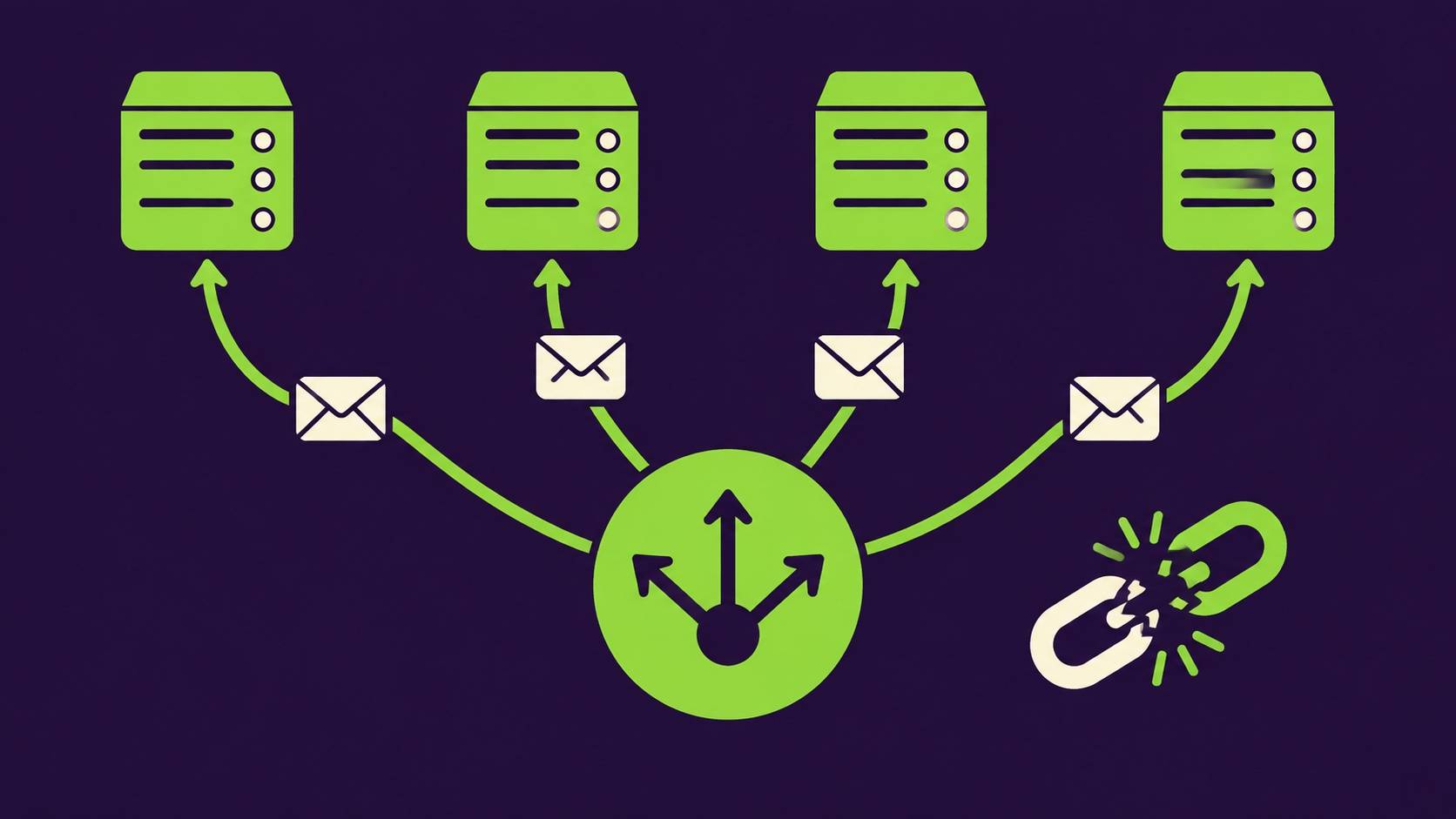
Table of Contents
Version 2026-07-28 brought the Model Context Protocol its biggest overhaul. The maintainers describe it in the official release post: MCP is moving from a bidirectional stateful protocol to a stateless request/response protocol. For teams running MCP servers in the enterprise, this mainly changes infrastructure and tool design.
What the changelog says
The specification changelog includes:
- No more protocol sessions: the
Mcp-Session-Idheader is removed from the Streamable HTTP transport. Servers that need state across calls issue explicit handles passed as ordinary tool arguments. - No
initializehandshake: every request carries its protocol version and client capabilities in_meta. A client may optionally callserver/discoverfirst. - No separate GET stream: change notifications use
subscriptions/listen; server-to-client requests such as sampling or elicitation use Multi Round-Trip Requests. - Header-based routing: according to the release post, method and tool names travel in
Mcp-MethodandMcp-Name, so gateways can route and authorise on them directly.
The Streamable HTTP page of the specification states that every request is its own POST and the server answers with JSON or an SSE stream scoped to that request. The old 2024 HTTP+SSE transport had already been replaced by Streamable HTTP earlier.
What it means in production
Load balancing gets simpler. Because every request describes itself, the release post says it can land on any instance behind a plain round-robin load balancer. Sticky sessions are no longer needed for the protocol itself.
State becomes explicit. What used to hang implicitly on the session must now be modelled deliberately by a tool, for example as a handle for a cart or a research job. That is more design work but makes visible which data lives where and for how long.
Gateways get more powerful. With method and tool names in headers, permissions can be checked per tool before a request reaches the server. See MCP gateway and MCP in Production: Connecting Agents With Least Privilege.
Handle retries deliberately. Without a session, a failed request may arrive again at a different instance. Write tools should therefore be built so that a duplicate execution has no duplicate effect, for example via unique job IDs. This is our architecture recommendation, not a verbatim requirement of the specification.
Migration checklist
- Do all clients, servers and adapters support 2026-07-28? The Microsoft MCP Gateway migration guide notes that a stateless gateway cannot translate requests for a legacy-only adapter.
- Where does state hang on the session today? Move it into explicit handles.
- Check write tools for safe retries.
- Define gateway permissions per tool name rather than per server.
- Test old and new versions in separate deployments; don't mix them in the same backend pool.
Our article on the Model Context Protocol covers the basics; the glossary explains stateless MCP.
Next step
Inventory your MCP servers and flag which ones rely on session state today. If you want to plan the migration together, see the formats on how we work together.
Sources: Model Context Protocol: The 2026-07-28 Specification, Key Changes, Streamable HTTP; Microsoft: MCP Gateway – MCP 2026-07-28 Migration.
Frequently Asked Questions
What is "Stateless MCP (2026-07-28 Specification): What Dropping Sessions Means for IT Architects" about?
The 2026-07-28 MCP specification removes sessions and the handshake. What changes for load balancers, gateways and tool design, with a migration checklist.
What the changelog says: what matters?
The specification changelog includes: No more protocol sessions: the header is removed from the Streamable HTTP transport. Servers that need state across calls issue explicit handles passed as ordinary tool arguments.
What it means in production: what matters?
Load balancing gets simpler. Because every request describes itself, the release post says it can land on any instance behind a plain round-robin load balancer.
Migration checklist: what matters?
Do all clients, servers and adapters support 2026-07-28? The Microsoft MCP Gateway migration guide notes that a stateless gateway cannot translate requests for a legacy-only adapter.
Related Articles
You might also be interested in these posts
 Tools & Technology
MCP in Production: Connecting Agents With Least Privilege
What the MCP specification covers for authorisation, what it leaves open, and a permissions matrix for agents in CMS, CRM and ad accounts.
 Tools & Technology
Computer-Use Agents vs. RPA: How Mid-Sized Companies Safely Automate Legacy Software Without an API
Agents that operate screens look like the answer to the old ERP without an API. A three-tier rule shows when they fit and how to secure them.
 Tools & Technology
Agentic RAG: When Company Knowledge Needs More Than Vector Search
Classic RAG, GraphRAG or agentic RAG? A decision grid for brand and product knowledge, with checks for contradictions and sources.