From Zara to Sephora: How AI Is Transforming Try-On in Fashion Retail
Zara tests AI fitting rooms, Sephora perfects AR makeup, Google integrates Virtual Try-On into Shopping. The complete comparison of VTO technologies with a 5-step playbook for marketing teams.
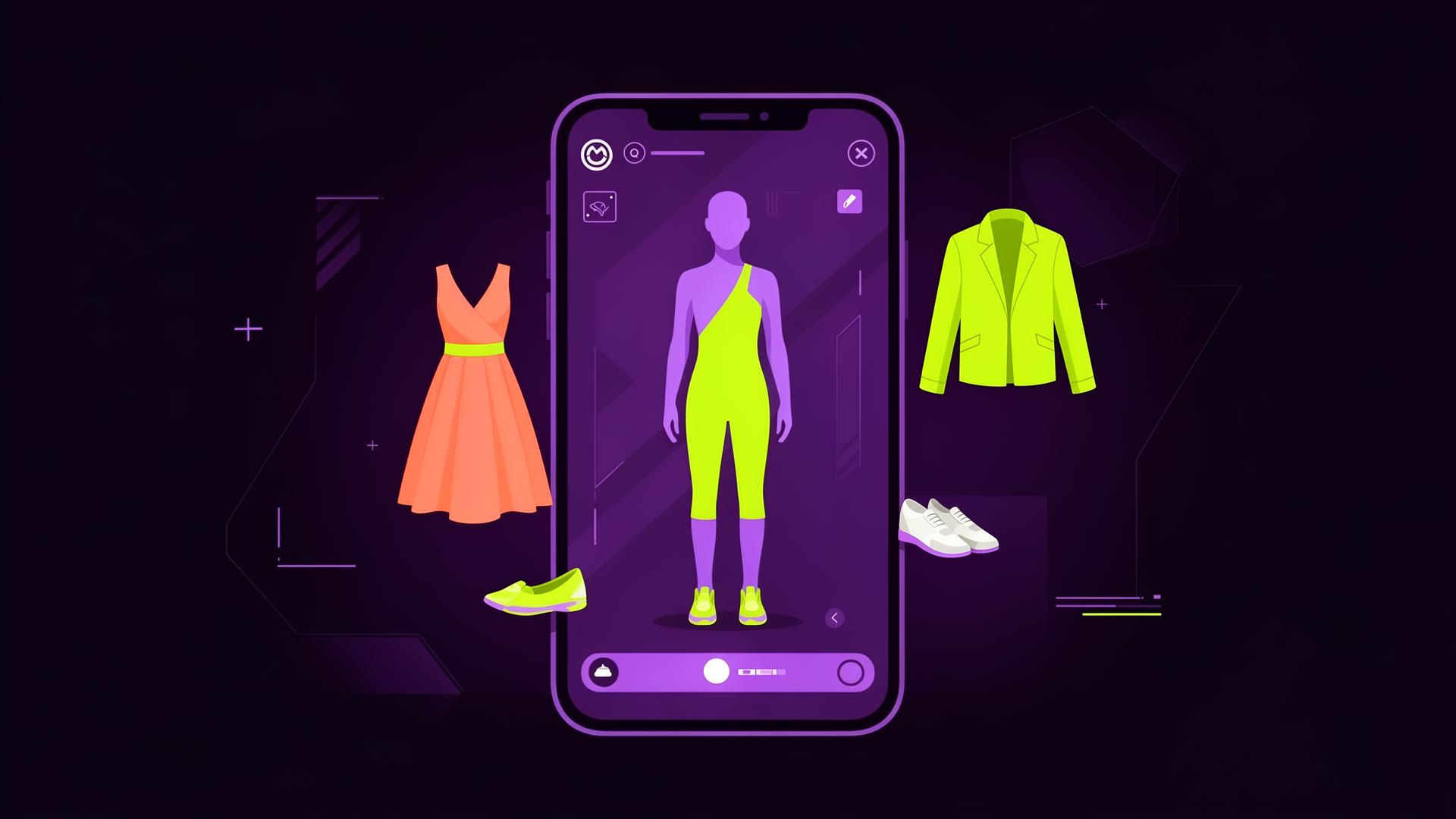
Table of Contents
From Zara to Sephora: How AI Try-On Is Revolutionizing Fashion Retail
In March 2026, Virtual Try-On is no longer a futuristic vision – it's reality. Zara launched its AI-powered Virtual Fitting Room in Spain in late 2025, Sephora has been perfecting its AR makeup tool for years, and dozens of startups are pushing increasingly sophisticated technology into the market.
For marketing teams, the message is clear: The fitting room is going digital – and brands that don't adapt will fall behind.
What Is Virtual Try-On?
Virtual Try-On (VTO) refers to technologies that allow customers to digitally "try on" products – without physically handling them. The technology uses a combination of:
- Generative AI – creates photorealistic images of people in different outfits
- Augmented Reality (AR) – overlays digital clothing on camera feeds in real-time
- 3D Body Mapping – creates digital body models for precise fit predictions
- Computer Vision – recognizes body proportions, skin tone, and lighting conditions
The Fundamental Difference vs. Traditional E-Commerce
| Traditional | Virtual Try-On |
|---|---|
| Product photos on models | See the product on your own body |
| Size charts and reviews | AI-based fit recommendations |
| High return rate (30-40%) | Reduced returns (up to 36% fewer) |
| Purchase uncertainty | Visual confirmation before buying |
Zara: The Fashion Giant Tests AI Fitting Rooms
What Zara Is Doing
In late December 2025, Zara activated its AI-powered Virtual Fitting Room initially in Spain. The feature is integrated directly into the Zara app and works as follows:
- Create avatar: Customers enter body measurements or use a selfie
- Build outfit: Drag clothing items from the Zara catalog onto the avatar
- Realistic rendering: Generative AI produces hyper-realistic images
- Fit feedback: The system provides size recommendations based on the body model
The Technology Behind It
Zara uses Generative AI to combine images of real models with different outfits. This differs from simple AR overlay: the results look like professional photo shoots, not digital stickers.
Reactions
Opinions are divided. Supporters praise the reduction in returns and improved shopping experience. Critics point out:
- Unrealistic body representations – AI-generated avatars could promote unrealistic beauty standards
- Privacy concerns – Body data is highly sensitive
- Accuracy – Fit predictions are not yet perfect
Sephora: Virtual Artist as the Gold Standard
The Pioneer Role
Sephora was one of the first major retailers to consistently deploy Virtual Try-On. The Sephora Virtual Artist has offered for years:
- Real-time makeup try-on via smartphone camera
- Shade Matching – AI finds the perfect foundation shade
- Product comparisons – test different looks side by side
- Purchase integration – go directly from try-on to cart
Results
The numbers speak for themselves:
- 200M+ shade trials since launch
- Conversion rate of VTO users is 2.5x higher than non-users
- Return rate for VTO purchases is 28% lower
The 2026 Market: Who Else Is Playing
Google Shopping
Google has integrated Virtual Try-On directly into Shopping search. Users can see clothing on various AI-generated models with different body types – without downloading an app.
Style3D
The Chinese company offers a B2B platform for 3D garment virtualization. Fashion brands can digitize their entire collection and provide VTO-ready assets.
WearFits
Specialized in shoes and accessories: WearFits uses AR to visualize shoes, bags, and backpacks in real-time on smartphones.
FASHN AI
An emerging startup specializing in AI-powered fashion photography – including Virtual Try-On for e-commerce product images.
The Technology in Detail
Generative AI vs. AR: Two Approaches
Approach 1: Generative AI (Zara, Google)
- Creates completely new images
- Photorealistic results
- Works without a camera
- Requires body measurements or selfie
- High computational requirements
Approach 2: Augmented Reality (Sephora, WearFits)
- Real-time camera overlay
- Interactive and immersive
- Needs good lighting conditions
- Limited for full-body clothing
- Lower computational requirements
The Role of Diffusion Models
The latest VTO systems are built on Diffusion Models – the same technology behind Midjourney and GPT-Image 1. These models are trained on millions of fashion photos and can:
- Adapt clothing to different body types
- Realistically simulate fabric drape and folding
- Account for different lighting conditions
- Correctly render accessories and layering
Impact on Marketing and E-Commerce
Reducing Returns
The biggest business case: 30-40% of all online fashion orders are returned – mainly due to fit issues. VTO can reduce this rate by up to 36%.
Boosting Conversion Rates
Studies consistently show: customers who use VTO buy more frequently. Conversion rates average 1.5-2.5x higher than standard product pages.
Revolutionizing Content Production
Instead of expensive photo shoots with dozens of models, brands can:
- Take one set of photos and AI-expand them to different body types
- Create personalized lookbooks for different target audiences
- Adapt social media content in real-time for different markets
Data for Personalization
VTO generates valuable data:
- Which combinations are tried on most frequently?
- Which sizes are preferred for which styles?
- How long do users engage with specific products?
Challenges and Risks
Data Privacy (GDPR)
Body data qualifies as biometric data and is subject to strict protection requirements:
- Explicit consent required
- Data minimization: Store only what's necessary
- Define deletion timelines
- No sharing with third parties without consent
Inclusivity
VTO systems must realistically represent all body types. Lack of diversity in training data can lead to:
- Distorted representations for certain skin tones
- Unrealistic proportions for plus-size bodies
- Limited functionality for mobility impairments
Technical Hurdles
- Performance on older smartphones – not all customers have high-end devices
- Color accuracy – screen colors differ from real colors
- Fabric simulation – transparent or glossy materials are difficult to render
5-Step Playbook for Marketing Teams
Step 1: Identify Use Cases
Not every product needs VTO. Prioritize:
- High-return categories (dresses, shoes, eyewear)
- High-price products (where purchase decisions take longer)
- Customizable products (colors, configurations)
Step 2: Evaluate Technology Partners
Assess providers on:
- Rendering quality – photorealistic or cartoonish?
- Integration – API-capable? Shopify/WooCommerce plugin?
- Scalability – how many SKUs supported?
- Cost – pay-per-use or flat rate?
Step 3: Launch a Pilot Program
Start with a limited product category and measure:
- Conversion rate (with vs. without VTO)
- Return rate
- Time on page
- Customer Satisfaction Score
Step 4: Leverage Data
Analyze VTO usage data:
- Which products are tried on most?
- Where do users drop off?
- Which combinations perform best?
Step 5: Scale and Iterate
Based on results:
- Expand successful categories
- Social media integration (Instagram Shopping, TikTok Shop)
- In-store integration (smart mirrors, kiosk systems)
Conclusion: The Future Belongs to the Digital Fitting Room
Virtual Try-On in 2026 is no longer a gimmick – it's a strategic competitive advantage. Zara, Sephora, and Google demonstrate how the technology reduces returns, boosts conversion rates, and transforms customer experience.
For marketing teams, the takeaway is clear: Now is the time to integrate VTO into your strategy. Those who wait risk their competitors establishing the digital fitting room as the new standard.
"Virtual Try-On is no longer a novelty. In 2026, it is a foundational capability for e-commerce." — WearFits Research
The question is no longer whether, but how quickly your company implements digital try-on.
Related Articles
You might also be interested in these posts
 Trends & Insights
Will AI Replace Marketing Jobs? What the 2026 Data Actually Shows
AI replaces tasks, not jobs — but it shifts role profiles radically. What McKinsey, BCG and Deloitte forecast for 2026, which roles grow, and who's actually at risk.
 Trends & Insights
Gemini Spark: Google’s Android Agent Stack (Pre-I/O 2026)
How Gemini Spark turns Android into an agent layer – and why brands need to become agent-ready now.
 Trends & Insights
Apple Intelligence Reboot: The WWDC 2026 Strategy
What Apple plans with the Siri-ChatGPT reboot – and how it positions against Gemini Spark.