Gemini Spark: Google’s Android Agent Stack (Pre-I/O 2026)
In short
How Gemini Spark turns Android into an agent layer – and why brands need to become agent-ready now.
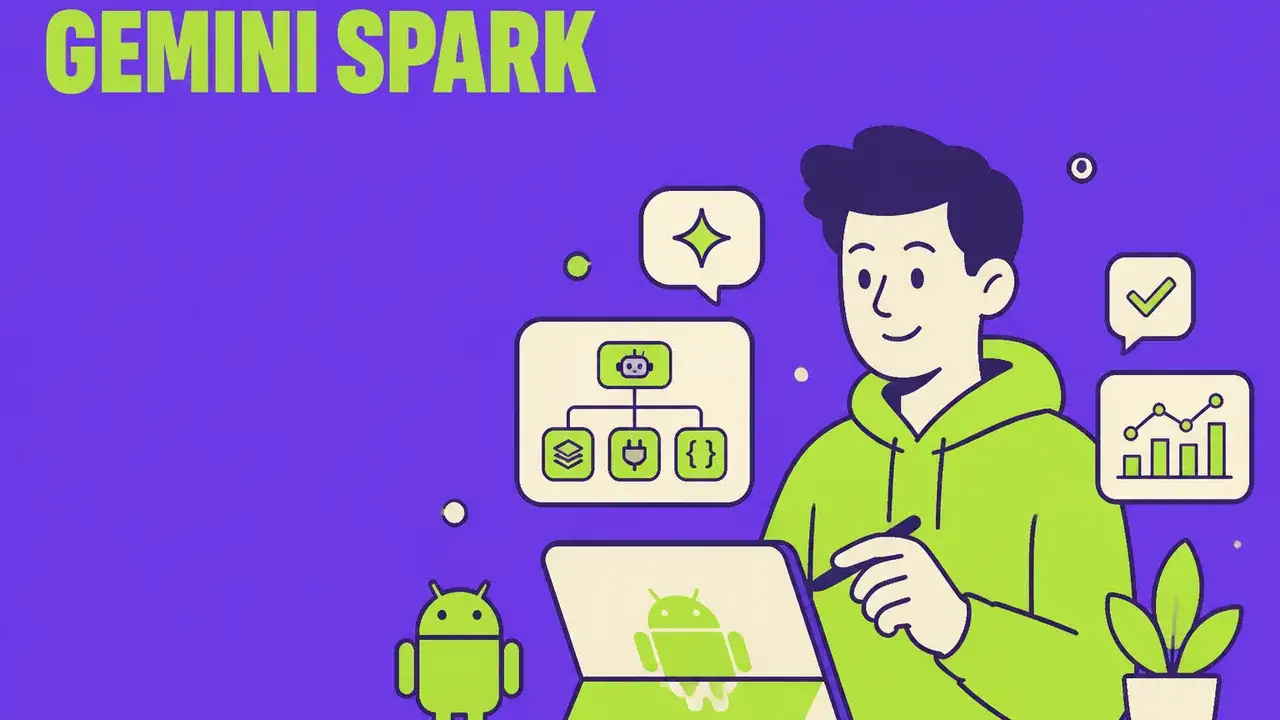
Table of Contents
Google ignites the agent layer on Android
A week before Google I/O 2026, Google lifted the curtain in a CNBC interview: Gemini on Android is moving from chatbot to active agent. Sameer Samat, who runs Android, describes the new behavior as: Gemini understands screen context, plans multi-step tasks (filling a shopping cart, booking a reservation, summarizing research) and executes them – "the human is always in the loop".
In parallel, APK-Insight leaks at 9to5Google revealed a name for the new agent: Gemini Spark. Google is positioning itself two weeks before Apple's WWDC with a concrete product, while Apple is still arguing about its next Siri reboot.
What's new about Gemini Spark
Three building blocks set Spark apart from previous assistants:
- Screen-context-aware: The agent understands what is currently on the display – product page, chat, PDF – and can operate on it without the user typing text.
- Tool use across apps: Spark uses Android Intents and the emerging Gemini App Actions 2 as a universal tool layer – similar to the Model Context Protocol (MCP) on the desktop side.
- Long-horizon tasks: Multi-step workflows like "compare three hotels before you book" continue in the background even with the screen off.
What this means for marketing teams
For brand owners, one 2024 assumption is collapsing: the user is no longer guaranteed to be on your website, app or own checkout. Spark – like ChatGPT Agent and Amazon Rufus – will act as a buyer agent. Three implications:
Agent-readiness becomes mandatory. Your product data must be structured (Schema.org Product, Offer, Review), unambiguous and machine-readable. Anyone relying on JavaScript-rendered prices and photos in lightboxes drops out of the agent comparison. This is the core territory of Agentic Engine Optimization (AEO).
Conversion attribution shifts. The click from the Google SERP becomes rarer; instead, Spark fires an API call or a fully pre-filled checkout link. Tools like server-side tracking, Conversion API and personhood credentials become baseline, not premium.
Brand voice in answer engines. Spark draws training and live data from reviews, knowledge graphs and – increasingly – your own content. Whoever is cited in answers wins. Whoever only buys performance ads is funding clicks the agent no longer makes.
Where Spark is already tangible
| Use case | Status (May 2026) | Marketing lever |
|---|---|---|
| In-app comparison on product pages | Live (Pixel 9/10, Samsung S26) | Complete Schema.org Product + Review markup |
| Multi-step booking (travel, restaurants) | Beta for partners (Booking, OpenTable) | Prepare API endpoints for agent checkout |
| Cross-tab context in Chrome | Rollout May 2026 | Canonical URLs and clean heading hierarchy |
| Reminders for open tasks ("still need to book") | Pilot phase | Design email and push channels to be agent-friendly |
How to prepare in 30 days
- AEO audit: Have your top 20 URLs checked by an LLM (GPT-5.6 Sol or Claude 4.6): can it extract price, availability, delivery time and main benefit from raw HTML?
- Expand structured data: Product, Offer, Review, FAQPage – each with stable IDs and curated images.
- Agent-first sitemap: Augment your XML sitemap with an
llms.txtand an/agent-api/documentation for direct agent requests. - Modernize conversion tracking: Server-side tracking + Conversion API live, plus a roadmap for personhood credentials as soon as the W3C spec stabilizes.
Bottom line
Gemini Spark is not Apple's 2011 Siri joke – it is the operational layer above Android that fuses search, apps and commerce into a single agent layer. If you are still debating "mobile-optimized" in 2026, you are two generations behind. The right question is: is my brand agent-ready?
Further reading: Agent-to-Agent eCommerce · AEO: Brand Visibility in ChatGPT & Co. · Personhood Credentials Glossary
Frequently Asked Questions
What is "Gemini Spark: Google’s Android Agent Stack (Pre-I/O 2026)" about?
How Gemini Spark turns Android into an agent layer – and why brands need to become agent-ready now.
Google ignites the agent layer on Android: what matters?
A week before Google I/O 2026, Google lifted the curtain in a CNBC interview: Gemini on Android is moving from chatbot to active agent. Sameer Samat, who runs Android, describes the new behavior as: Gemini understands screen context, plans multi-step tasks (filling a shopping cart, booking a reservation, summarizing research) and executes them – "the human is always in the loop".
What's new about Gemini Spark: what matters?
Three building blocks set Spark apart from previous assistants: Screen-context-aware: The agent understands what is currently on the display – product page, chat, PDF – and can operate on it without the user typing text.
What this means for marketing teams: what matters?
For brand owners, one 2024 assumption is collapsing: the user is no longer guaranteed to be on your website, app or own checkout. Spark – like ChatGPT Agent and Amazon Rufus – will act as a buyer agent.
Related Articles
You might also be interested in these posts
 Trends & Insights
Why Websites Block AI Agents — and What Brands Should Do
Agents do not see ads. Why blocking is mainly a revenue question, how pay per crawl works and which content brands should keep open.
 Trends & Insights
Agent Skill Marketplaces: The New MCP Economy and How Brands Monetize It
Skills, MCP servers, and agent cards are becoming a new distribution channel. How discovery and ranking work inside agents, which monetization models hold up, and what brands need as skill providers.
 Trends & Insights
Nerd Sniping: Why Interesting Problems Stall AI Projects
A side problem is too appealing and two weeks are gone. Where the term comes from, why fast prototypes amplify it and which four rules make curiosity useful.