A2A eCommerce: When AI Agents Take Over Commerce
In short
Agent-to-Agent Commerce is no longer a future vision: Autonomous AI agents negotiate, order, and optimize supply chains in real-time. What this means for B2B, DTC, and marketing teams.
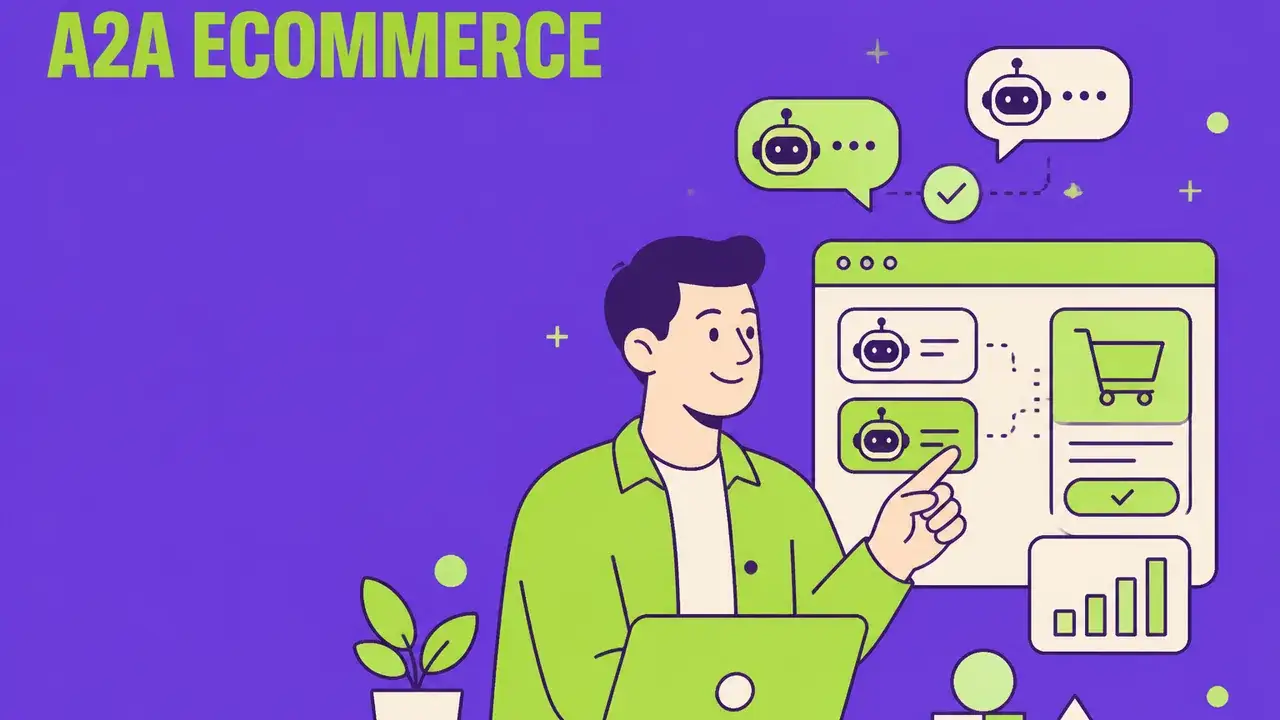
Table of Contents
Agent-to-Agent Commerce: When AI Agents Take Over Purchasing
On February 25, 2026, Jaya Ramachandran published a whitepaper on Substack with a clear thesis: Agent-to-Agent (A2A) eCommerce is not the next iteration of online retail — it's a complete reconstruction. Autonomous AI agents negotiate, order, and optimize supply chains without human intervention. (Source: Jaya Ramachandran, Substack)
What sounds like science fiction is already reality: Amazon Rufus, Walmart Sparky, and Zalando assistants advise customers autonomously. In B2B, procurement agents manage supply chains in real-time. The A2A protocol — originally developed by Google, now under the Linux Foundation — provides the technical foundation.
What Is A2A eCommerce?
Agent-to-Agent Commerce means: AI agents communicate directly with each other to process transactions. No human clicks, no forms are filled out. Instead:
- Agent Cards (JSON manifests) describe capabilities, authentication, and data formats
- Tasks manage transaction status: "submitted," "working," "input-required"
- Artifacts transport data: text, files, structured data packages
- Server-Sent Events (SSE) deliver real-time updates
Ramachandran describes three interaction models: Agent-to-Site (direct platform access), Agent-to-Agent (peer negotiation), and Brokered (via intermediary).
"A2A eCommerce is not just an upgrade — it's a rearchitecture of trade." — Jaya Ramachandran
The Protocol Ecosystem
A2A doesn't work in isolation. It's part of a growing protocol stack:
| Protocol | Function |
|---|---|
| A2A (Google/Linux Foundation) | Agent communication and task management |
| MCP (Model Context Protocol) | Tool integration for AI agents |
| AP2 (Agent Payments Protocol) | Secure payment processing between agents |
Particularly relevant for marketing teams: The Orchestration Hub Pattern. Instead of direct peer-to-peer connections, a central hub mediates all agent interactions — with identity verification, rate limiting, audit logging, and policy enforcement.
B2B: Self-Steering Supply Chains
The biggest efficiency gains are in B2B:
Procurement Automation
A supply-control agent monitors inventory levels in real-time, detects impending shortages, and automatically triggers orders with supplier agents. All communication runs through standardized DataParts — no emails, no phone calls, no delays.
Smart Manufacturing
Production planner agents coordinate quality control and maintenance agents. Machine status is streamed via SSE, predictive maintenance is automatically initiated. Just-in-time evolves from a concept to an agentic reality.
Negotiation Automation
Agents negotiate prices, delivery terms, and SLAs autonomously within defined parameters. Ramachandran cites 30–50% efficiency gains in operational cycles as a realistic magnitude.
DTC: Hyper-Personalized Customer Journeys
In Direct-to-Consumer, A2A transforms the shopping experience:
Next-Generation Shopping Assistants
- Amazon Rufus answers product questions and suggests alternatives
- Walmart Sparky summarizes reviews and boosts conversion by 20%
- Zalando Assistant advises based on personal style preferences
Autonomous Bundle Creation
Agents automatically create product bundles for life events — moving, wedding, baby — by negotiating discounts with retailer agents.
Customer Support Without Hold Queues
Support agents resolve returns and complaints through multi-system orchestration: CRM, logistics, and payment systems are addressed in parallel.
What This Means for Marketing Teams
A2A changes not just commerce — it changes the entire marketing architecture:
1. Content Must Become Machine-Readable
When agents make purchasing decisions, structured content becomes more important than emotional storytelling. Product data, API documentation, and Agent Cards become marketing assets.
2. SEO Becomes AEO (Agent Engine Optimization)
Google rankings alone no longer matter. Agents evaluate products based on data quality, API availability, and Agent Card compatibility.
3. Personalization Scales Exponentially
When every customer has a personal shopping agent, 1:1 personalization is no longer optional — it becomes a baseline requirement.
4. MarTech Stacks Become Agent-Ready
Tools must offer A2A-compatible APIs. The question is no longer "What features does the tool have?" but "Can my agent interact with it?" As Marketing Agents 2026 shows, autonomous agents are already handling operational tasks – A2A is the next stage of this evolution.
5. Agentic Workflows as Foundation
A2A commerce requires that companies have already established Agentic AI Workflows. Without internal agent infrastructure, there's no basis for external agent communication.
6. MCP as Enabler
The Model Context Protocol (MCP) forms the tool integration layer for A2A agents. While A2A governs communication between agents, MCP enables access to external tools and data sources.
Challenges and Risks
Ramachandran identifies clear risks:
- Hallucinations: LLM-based agents can trigger erroneous orders. RAG and validation layers are mandatory.
- Security: Authorization creep, where agents gradually acquire more permissions. OAuth2, mTLS, and encrypted payloads are standard.
- EU AI Act Compliance: Transparency requirements for autonomous decision systems. Agents must act traceably.
- Systemic Risks: A faulty agent can trigger cascade effects across the entire supply chain.
Implementation Roadmap
For companies evaluating A2A:
- Readiness Assessment: Evaluate data quality, workflow maturity, and compliance status
- Define Agent Cards: Describe own capabilities as machine-readable manifests
- Pilot in Low-Risk Areas: e.g., internal procurement processes or FAQ chatbots
- Measure KPIs: Cycle time, error rate, cost-per-transaction
- Build Governance: Negotiation rules, spend limits, audit trails
- Scale: From pilot to production with observability tools like OpenTelemetry
Outlook: The $3–5 Trillion Opportunity
McKinsey estimates the global potential of agentic commerce at $3–5 trillion by 2030. In US B2C retail alone, agents could orchestrate $1 trillion in revenue.
The question is no longer whether, but when A2A commerce becomes the standard. Companies that make their infrastructure agent-ready now secure a structural advantage.
Conclusion: Commerce Becomes Agentic
A2A eCommerce is not a technology gimmick — it's the logical consequence of three developments: better LLMs, standardized protocols, and rising automation expectations.
For marketing teams, this means: If you don't optimize your products and services for agents, you'll be ignored by agents.
At Davies Meyer, we help companies prepare their commerce and marketing infrastructure for the agentic era — from Agent Card strategy to MCP integration.
This article is based on the whitepaper "Agent-to-Agent (A2A) eCommerce" by Jaya Ramachandran as well as analyses from McKinsey, BigCommerce, and Google.
Frequently Asked Questions
What is "A2A eCommerce: When AI Agents Take Over Commerce" about?
Agent-to-Agent Commerce is no longer a future vision: Autonomous AI agents negotiate, order, and optimize supply chains in real-time. What this means for B2B, DTC, and marketing teams.
Agent-to-Agent Commerce: When AI Agents Take Over Purchasing: what matters?
On February 25, 2026, Jaya Ramachandran published a whitepaper on Substack with a clear thesis: Agent-to-Agent (A2A) eCommerce is not the next iteration of online retail — it's a complete reconstruction.
What Is A2A eCommerce?
Agent-to-Agent Commerce means: AI agents communicate directly with each other to process transactions. No human clicks, no forms are filled out.
The Protocol Ecosystem: what matters?
A2A doesn't work in isolation. It's part of a growing protocol stack: Particularly relevant for marketing teams: The Orchestration Hub Pattern. Instead of direct peer-to-peer connections, a central hub mediates all agent interactions — with identity verification, rate limiting, audit logging, and policy enforcement.
Related Articles
You might also be interested in these posts
 Trends & Insights
Retail Media Goes Agentic: MCP-Native Ad Serving for Shopping Agents
When agents shop, ads need structured data instead of creatives. What Mirakl and Moloco are demonstrating.
 Trends & Insights
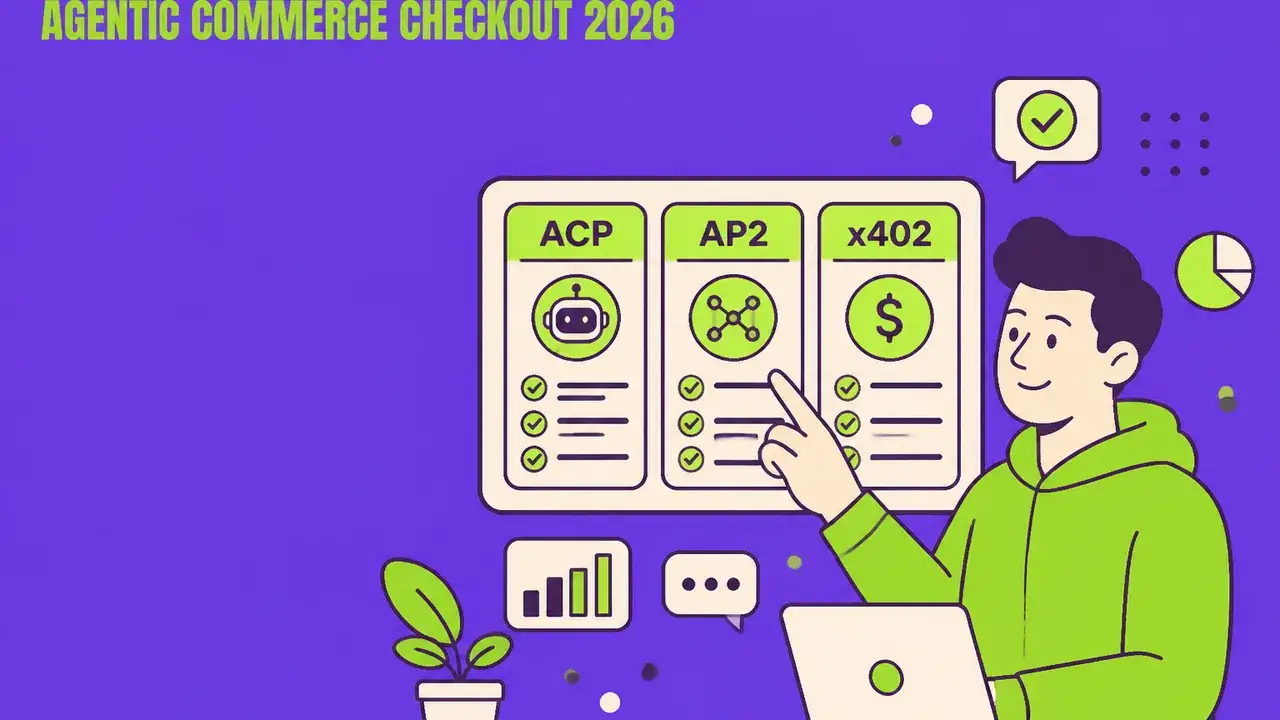
Agentic Commerce Checkout 2026: ACP vs. AP2 vs. x402 Compared
ACP, AP2, and x402 compared: how agents pay, who is liable, which mandates and spend limits are required, and what merchants and brands need to prepare technically now.
 Trends & Insights
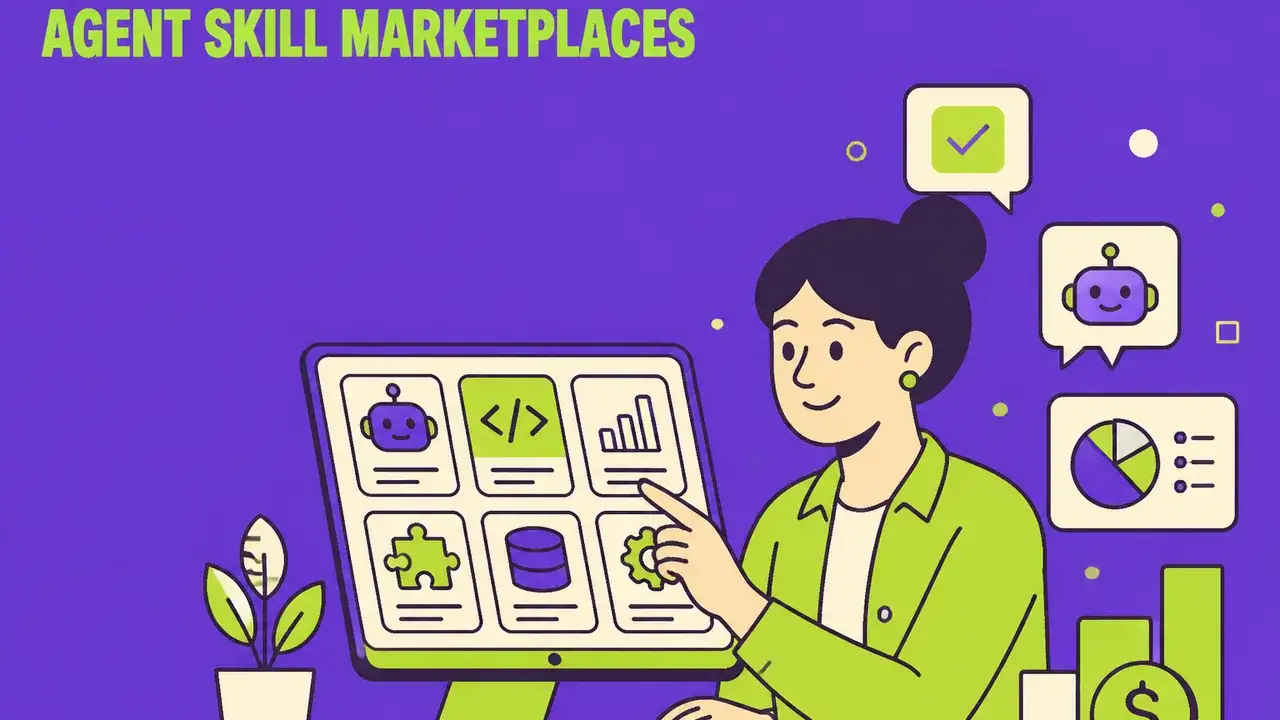
Agent Skill Marketplaces: The New MCP Economy and How Brands Monetize It
Skills, MCP servers, and agent cards are becoming a new distribution channel. How discovery and ranking work inside agents, which monetization models hold up, and what brands need as skill providers.