Why Websites Block AI Agents — and What Brands Should Do
In short
Agents do not see ads. Why blocking is mainly a revenue question, how pay per crawl works and which content brands should keep open.
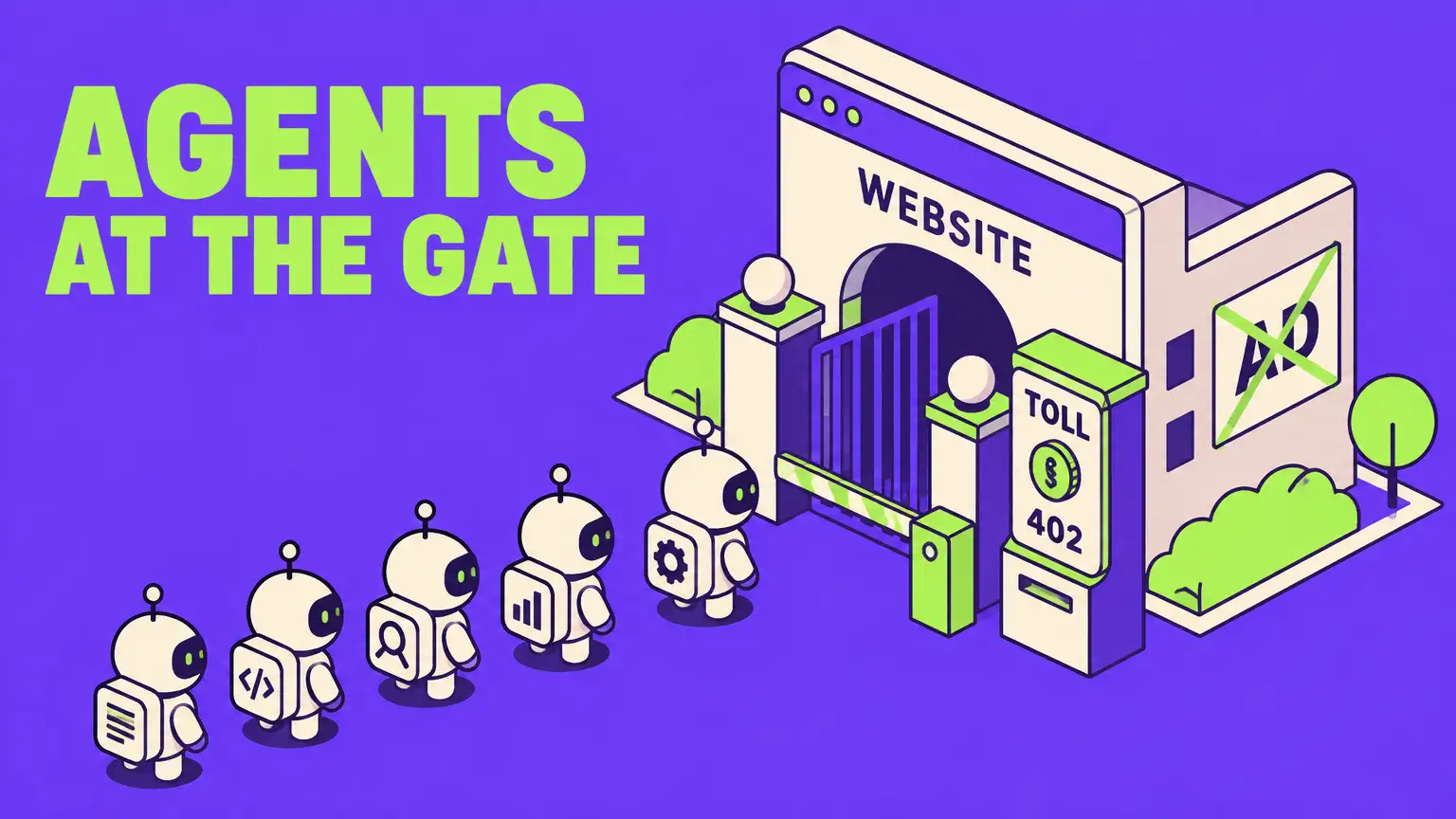
Table of Contents
More and more websites are blocking AI agents and crawlers. Security is usually the stated reason. The economic reason is simpler: agents do not see ads or buy subscriptions — and that is what much of the open web lives on.
1) The situation
Cloudflare describes it this way: more than half of internet traffic is now non-human, and daily requests from AI agents on its network have grown sharply over the past year. Agents do not respond to ads, but there is usually a person with a task behind them (Cloudflare).
The old deal — search engines crawl, visitors come back — no longer holds when an answer engine reads the page and returns only a summary.
2) Site owners' tools
- Block: one-click blocking of AI bots has existed since 2025 (Cloudflare).
- Disallow training, allow search: a new setting is meant to let mixed-use crawlers index for search while refusing training; according to Cloudflare, Apple, Google and Microsoft honour it or have committed to (Cloudflare).
- Charge: with pay per crawl a crawler pays per request — or receives "402 Payment Required" with a price. The feature is in closed beta (Cloudflare Docs).
3) The question for brands: block or open?
For publishers, blocking is often rational. For brands that want to sell, it is usually a mistake: if you lock agents out, you are not considered when agents research and buy — see agentic commerce and AEO.
A sensible split:
- Open product, price and service information. That is what an agent needs to recommend you.
- Protect or price exclusive editorial content. Studies, data and analysis that are your actual asset.
- Decide training and search separately. Not a blanket "block AI".
- Review regularly who comes. Which agents request, and what do they fetch?
Conclusion
Blocking agents is mainly a dispute about revenue models. Brands should not adopt it blindly: the content you sell with should be readable by agents. Protect what you want to be paid for.
Frequently Asked Questions
What is "Why Websites Block AI Agents — and What Brands Should Do" about?
Agents do not see ads. Why blocking is mainly a revenue question, how pay per crawl works and which content brands should keep open.
The situation: what matters?
Cloudflare describes it this way: more than half of internet traffic is now non-human, and daily requests from AI agents on its network have grown sharply over the past year.
Site owners' tools: what matters?
Block: one-click blocking of AI bots has existed since 2025 (Cloudflare). Disallow training, allow search: a new setting is meant to let mixed-use crawlers index for search while refusing training; according to Cloudflare, Apple, Google and Microsoft honour it or have committed to (Cloudflare).
The question for brands: block or open?
For publishers, blocking is often rational. For brands that want to sell, it is usually a mistake: if you lock agents out, you are not considered when agents research and buy — see agentic commerce and AEO.
Related Articles
You might also be interested in these posts
 Trends & Insights
Meta Ads MCP: What the Connection Means for Ad Teams
Meta ads MCP server in Databricks Marketplace: verified availability, possible uses and approval rules for agentic advertising tasks.
 Trends & Insights
Agentic Commerce Checkout 2026: ACP vs. AP2 vs. x402 Compared
ACP, AP2, and x402 compared: how agents pay, who is liable, which mandates and spend limits are required, and what merchants and brands need to prepare technically now.
 Trends & Insights
A2A eCommerce: When AI Agents Take Over Commerce
Agent-to-Agent Commerce is no longer a future vision: Autonomous AI agents negotiate, order, and optimize supply chains in real-time. What this means for B2B, DTC, and marketing teams.