Sovereign AI: EU Cloud and Digital Sovereignty for DACH Marketing
In short
EU regions, European providers, open weights in your own VPC: which sovereignty tier DACH marketing actually needs, what it costs, and how a hybrid architecture by data classification looks.
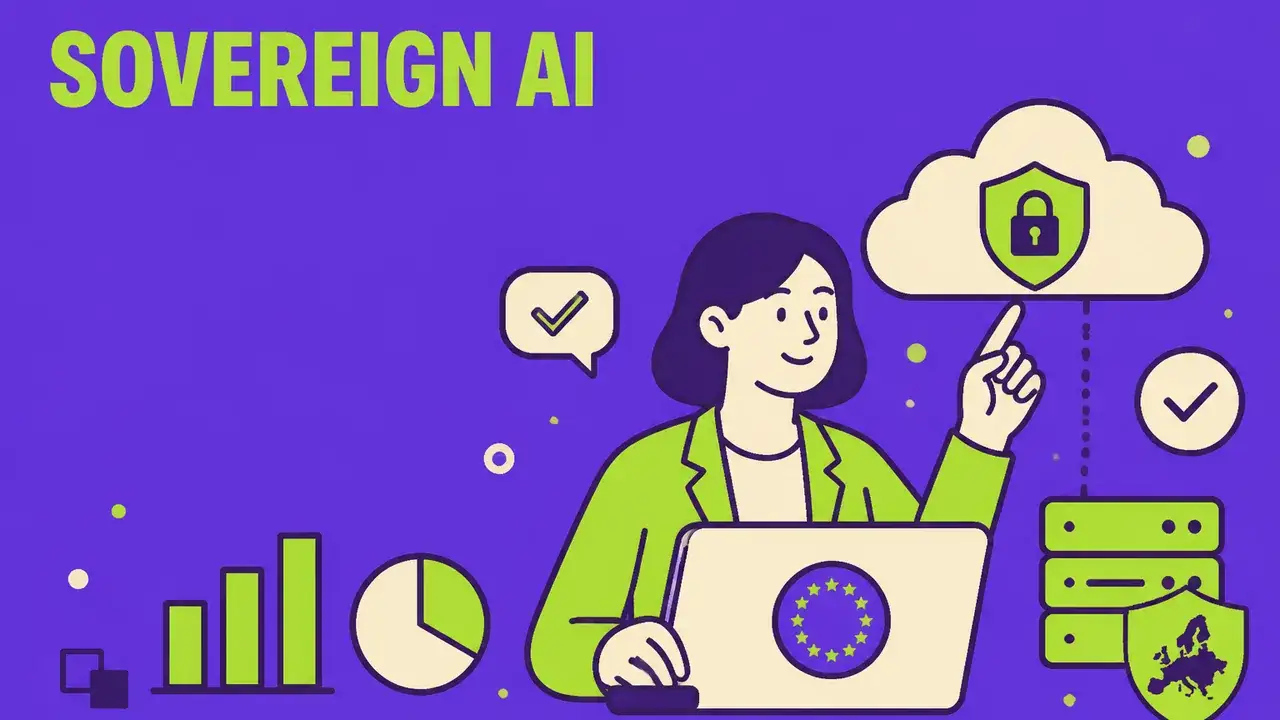
Table of Contents
Sovereign AI: EU Cloud and Digital Sovereignty for DACH Marketing
The proliferation of advanced AI models has fundamentally reshaped the digital landscape for businesses across all sectors. For marketing departments in the DACH region, the strategic choice of AI infrastructure has transcended mere performance metrics to encompass critical considerations of digital sovereignty. This article explores the concept of Sovereign AI within the context of EU cloud infrastructure, analyzing its drivers, available options, and practical implications for marketing workloads as of mid-2026.
Digital sovereignty, particularly in the context of AI, refers to a nation's or organization's ability to govern its data, infrastructure, and algorithms without undue influence from foreign laws or entities. For DACH marketers, this translates into ensuring that their AI-driven campaigns, customer data processing, and content generation pipelines comply with stringent European regulations, mitigate geopolitical risks, and maintain strategic autonomy.
Defining Sovereign AI in the European Context
Sovereign AI is not merely about physical data location; it encompasses a broader spectrum of control and resilience. It implies that the entire AI value chain – from data ingress and processing to model training, inference, and deletion – adheres to national or supranational legal frameworks, primarily the GDPR and, increasingly, the EU AI Act in Practice. This definition extends to the underlying cloud infrastructure, the origin and control of AI models, and the legal jurisdiction governing service providers.
For DACH businesses, the move towards Sovereign AI is a strategic imperative driven by evolving regulatory pressures, increasing data sensitivity, and the desire to build trust with a privacy-conscious European consumer base. It assures that data critical to marketing intelligence, customer profiling, and campaign performance remains under European jurisdiction and control.
Key Drivers for Sovereign AI Adoption in DACH
Several fundamental factors are accelerating the demand for Sovereign AI solutions within the DACH region, influencing procurement decisions at both the enterprise and public sector levels.
The CLOUD Act and Extraterritorial Jurisdiction
The U.S. CLOUD Act, enacted in 2018, allows U.S. law enforcement to compel U.S.-based technology companies to provide stored data, regardless of where the data is physically located, potentially bypassing local privacy laws. While efforts have been made to establish bilateral agreements, the inherent conflict with European data protection principles remains a significant concern for organizations handling sensitive customer data.
Schrems Jurisprudence and Data Transfers
The landmark "Schrems II" ruling by the European Court of Justice invalidated the EU-U.S. Privacy Shield, profoundly impacting data transfers to the U.S. Subsequent rulings and the ongoing legal complexities surrounding data transfer mechanisms (e.g., Standard Contractual Clauses) continue to highlight the risks associated with processing EU personal data outside the EU legal perimeter. This jurisprudence underscores the need for robust legal and technical safeguards, pushing organizations towards European data residency and processing.
Public Sector Procurement Guidelines
Public authorities in DACH, from federal ministries to municipal administrations, are increasingly mandating digital sovereignty clauses in their IT procurement processes. This often translates to requirements for data processing within the EU, use of European cloud providers, and audited compliance with EU and national data protection laws. This trend significantly influences the market, as many enterprises also serve public sector clients or operate in regulated environments that mirror these requirements.
Regulated Industries and Critical Infrastructures
Sectors such as finance, healthcare, energy, and defense, which often manage highly sensitive data or operate critical infrastructure, face stringent regulatory frameworks. Supervisory bodies in these industries are increasingly scrutinizing cloud and AI deployments, often demanding demonstrable control over data and systems. For marketing departments in these sectors, AI solutions must meet these elevated compliance thresholds, making Sovereign AI a non-negotiable requirement.
Comparative Options for Sovereign AI Infrastructure
The market for cloud and AI services offering digital sovereignty is evolving rapidly. DACH businesses have several architectural patterns and provider types to consider.
EU Regions of Hyperscalers with Data Boundary Guarantees
Major hyperscale cloud providers (e.g., AWS, Microsoft Azure, Google Cloud) have established extensive EU regions, often with specific "data boundary" commitments. These commitments typically ensure that data at rest and in transit remains within the specified EU geographic boundaries. Some hyperscalers offer "sovereign cloud" versions or partnerships (e.g., Microsoft Cloud for Sovereignty, AWS European Sovereign Cloud announced for 2024), striving to mitigate CLOUD Act risks through operational and legal models, though full immunity is debated by legal experts. For marketing, leveraging these EU regions can offer high scalability and access to the latest AI models like GPT-5.6 (Sol/Terra/Luna), Claude Opus 5, and Gemini 3.6 Flash, provided robust contractual clauses and operational vetting are in place.
European Cloud Providers and AI Developers
The European market features a growing ecosystem of sovereign cloud providers and AI developers:
- Infrastructure Providers: Companies like IONOS Cloud, OVHcloud, and StackIT offer cloud infrastructure entirely operating under EU law, often with ISO 27001 and C5 certifications. These providers emphasize transparency regarding data location, access, and legal jurisdiction.
- AI Model Developers: European startups like Aleph Alpha (Luminous models) and Mistral AI (Mistral Large models) develop foundation models based in the EU, with strong commitments to European values and data protection. They offer alternatives to U.S.-developed models, which can be deployed on EU-sovereign infrastructure.
These options typically involve a trade-off. While they offer stronger sovereignty guarantees, they may have smaller ecosystems, fewer specialized services, or slightly less bleeding-edge model performance compared to the hyperscaler flagships.
Open-Weight Models in Own Virtual Private Cloud (VPC)
Deploying open-weight models (e.g., certain versions of Llama, Falcon) within a company's own VPC hosted on EU-sovereign infrastructure offers a high degree of control. This allows organizations to fine-tune models with their proprietary data while maintaining full oversight over the data processing environment. This approach requires significant internal AI/ML engineering expertise and resources for model management, infrastructure scaling, and security. It offers strong data privacy for AI & GDPR compliance but comes with higher operational overhead.
On-Premises and Edge Deployments
For the highest level of control, some organizations opt for on-premises AI deployments or edge computing solutions. This is particularly relevant for sensitive data processing or applications requiring extremely low latency. While offering ultimate data sovereignty, this path involves substantial upfront investment in hardware, infrastructure management, and ongoing maintenance. For most marketing departments, the scalability and agility benefits of cloud-based solutions usually outweigh the benefits of fully on-premises deployments, but hybrid approaches are common.
Cost and Quality Trade-offs
Pursuing Sovereign AI often involves a balancing act between cost, agility, and performance.
| Feature / Provider Type | Hyperscalers (EU Regions) | European Providers | Open-Weight in VPC | On-Prem/Edge |
|---|---|---|---|---|
| Sovereignty Level | Moderate to High | High | Very High | Highest |
| Cost (TCO) | Variable (scalable) | Competitive | High (initial + ops) | Very High |
| AI Model Access | Broadest (latest via API) | Specific (EU models) | Custom/Open-Weight | Custom |
| Scalability | Excellent | Good | Moderate | Limited |
| Management Overhead | Low-Moderate | Moderate | High | Very High |
| Innovation Pace | Fastest | Good | Dependent on FOSS | Dependent on Internal R&D |
| Video AI (e.g.) | Veo 3.1, Kling 3.0 access | Veo 3.1, Kling 3.0 via integrations or similar partner APIs | Custom open-source or commercial models | Custom open-source or commercial models |
Note: Costs are relative and depend heavily on scale, usage patterns, and internal expertise.
Hyperscalers offer unparalleled access to cutting-edge models like GPT-5.6 series, Claude Opus 5, and Gemini 3.6 Flash, along with specialized services for video generation (Veo 3.1, Kling 3.0). European providers might offer robust infrastructure but require more integration work for these top-tier AI models or rely on partnerships to bridge this gap. Running open-weight models locally offers sovereignty but demands significant internal ML expertise.
Hybrid Architectures with Data Classification-Based Routing
A pragmatic approach for many DACH marketing organizations is a hybrid architecture, routing data and workloads based on their sensitivity and classification.
- Data Classification: Categorize all marketing data (e.g., customer PII, aggregated campaign data, internal strategy documents, public content) into tiers (e.g., highly sensitive, sensitive, public).
- Sensitive Data Workflow: Process highly sensitive personal data (e.g., explicit opt-in preferences, granular behavioral data) using AI models deployed on demonstrably sovereign EU infrastructure, either through a European cloud provider or highly controlled open-weight models in a VPC.
- Less Sensitive Data Workflow: Utilize hyperscalers' EU regions for aggregated, anonymized, or less sensitive data where the performance and feature set of their flagship models (GPT-5.6, Claude Opus 5) are critical for tasks like large-scale content generation, trend analysis, or semantic search.
- Content & Creative Generation: For video generation using Veo 3.1 or Kling 3.0, ensure that any prompt data containing PII is strictly anonymized or processed via a fully sovereign pipeline before being sent to the LLM API endpoints.
- Infrastructure as Code & API Gateways: Implement robust API gateways and Infrastructure as Code (IaC) to define and enforce routing rules, ensuring data never crosses jurisdictions without explicit classification and approval.
This tiered approach allows organizations to leverage global AI innovation while rigorously protecting their most valuable and sensitive assets.
Procurement Checklist and Contractual Clauses
When embarking on a Sovereign AI strategy, marketing leads and CMOs should collaborate closely with legal and IT departments.
Procurement Checklist:
- Jurisdiction & Law: Does the provider operate and store data solely under EU law? What are the implications of their parent company's origin?
- Data Center Location: Are all data centers and backup facilities physically located within the EU/EEA?
- Data Access: Who has access to your data? Is it restricted to EU personnel? Are there guarantees against foreign government access (e.g., CLOUD Act warrants)?
- Certifications: Does the provider adhere to relevant EU security and privacy certifications (e.g., C5, ISO 27001, GDPR compliance)?
- Sub-processors: Are all sub-processors transparently listed and compliant with EU data protection laws?
- AI Model Provenance: Where were the AI models trained? What data was used? Is there a risk of intellectual property leakage or bias from non-EU sources?
- Exit Strategy: What mechanisms are in place for data portability and seamless migration to an alternative provider without vendor lock-in?
Key Contractual Clauses:
- Explicit Data Residency Clause: Mandating that all processing, storage, and backup of specified data categories occur exclusively within the EU/EEA.
- No Foreign Government Access Clause: A strong commitment from the provider to challenge, resist, and immediately inform the customer of any foreign government requests for data (e.g., under the CLOUD Act).
- GDPR-Compliant Data Processing Agreement (DPA): Ensuring the DPA is robust, covers all relevant articles, and clearly defines roles and responsibilities.
- Audit Rights: The right to conduct independent audits of the provider's infrastructure, security practices, and data handling procedures.
- Choice of Law and Jurisdiction: Specifying that the contract is governed by German or EU law and that any disputes will be heard in EU courts.
- Transparency on AI Model Training Data: If using commercial AI models, requesting transparency or guarantees regarding the provenance and licensing of their training data.
Practical Recommendation for Marketing Workloads
For DACH marketing organizations in 2026, a pragmatic and secure approach involves a hybrid strategy, leaning heavily on EU-sovereign infrastructure for sensitive operations while intelligently integrating best-in-class AI models.
- Prioritize Data Classification: Start by meticulously classifying all marketing data. This is the foundation for an effective Sovereign AI strategy.
- Leverage European Cloud for PII & Critical IP: For all personally identifiable information (PII), customer communication databases, and proprietary marketing strategies, opt for EU-based cloud providers (e.g., IONOS Cloud, OVHcloud, StackIT) or a carefully managed open-weight model deployment within a dedicated VPC. Implement fine-tuning models like Aleph Alpha Luminous for specific tasks here.
- Utilize Hyperscaler EU Regions for Scale & Cutting-Edge Generative AI (Non-Sensitive): For large-scale content generation (blog posts, social media updates, ad copy), trend analysis, and general creative assistance where input data is anonymized or non-sensitive, leverage the EU regions of hyperscalers. This provides access to the powerful capabilities of GPT-5.6 architectures, Claude Opus 5, or Gemini 3.6 Flash for maximum impact and agility. Similarly, for advanced video concepts and generation via Veo 3.1 or Kling 3.0, use these platforms with strict anonymization of all input prompts.
- Implement Robust Access Controls & Encryption: Regardless of the provider, ensure end-to-end encryption for data in transit and at rest, coupled with strict identity and access management (IAM) policies.
- Continuous Legal & Security Review: The regulatory landscape is dynamic. Regularly review contracts, policies, and technological deployments with legal counsel to ensure ongoing compliance.
This multi-faceted approach enables DACH marketing teams to harness the power of global AI innovation while safeguarding data privacy, ensuring regulatory compliance, and maintaining digital autonomy.
Fazit
The pursuit of Sovereign AI is no longer a niche concern but a strategic imperative for DACH marketing organizations. By understanding the underlying drivers, carefully evaluating the available infrastructure and model options, and adopting a data-classification-led hybrid architecture, CMOs can navigate the complex landscape of AI deployment. This approach ensures compliance with European regulations, protects valuable data assets, and builds trust with customers, all while leveraging the transformative power of artificial intelligence to drive marketing success.
Davies Meyer supports companies in defining and implementing pragmatic and compliant AI strategies, from initial data classification to architectural design and vendor selection.
Frequently Asked Questions
What is "Sovereign AI: EU Cloud and Digital Sovereignty for DACH Marketing" about?
EU regions, European providers, open weights in your own VPC: which sovereignty tier DACH marketing actually needs, what it costs, and how a hybrid architecture by data classification looks.
Sovereign AI: EU Cloud and Digital Sovereignty for DACH Marketing: what matters?
The proliferation of advanced AI models has fundamentally reshaped the digital landscape for businesses across all sectors. For marketing departments in the DACH region, the strategic choice of AI infrastructure has transcended mere performance metrics to encompass critical considerations of digital sovereignty.
Defining Sovereign AI in the European Context: what matters?
Sovereign AI is not merely about physical data location; it encompasses a broader spectrum of control and resilience. It implies that the entire AI value chain – from data ingress and processing to model training, inference, and deletion – adheres to national or supranational legal frameworks, primarily the GDPR and, increasingly, the EU AI Act in Practice.
Key Drivers for Sovereign AI Adoption in DACH: what matters?
Several fundamental factors are accelerating the demand for Sovereign AI solutions within the DACH region, influencing procurement decisions at both the enterprise and public sector levels.
Related Articles
You might also be interested in these posts
 Strategy
Shadow AI & Tool Sprawl: How Marketing Teams Regain Control of AI Chaos
Unapproved AI tools, private accounts, duplicate licenses: how marketing teams detect shadow AI, build a tool inventory, and create governance with fast-lane approvals that don't slow innovation.
 Strategy
Labelling AI Content: What the EU AI Act Requires — and What It Does Not
Chatbot, avatar, photorealistic image: a clear line on Article 50 transparency duties, plus content credentials and the process behind them.
 Strategy
EU AI Act Article 50: What Marketing Must Label Since 2 August 2026
Chatbots, synthetic media, deepfakes: transparency duties in practice – with a decision tree and ready-to-use wording.