Sovereign AI Automation: n8n, Make and the EU AI Act
In short
Self-host or EU data centre? Licensing, data location and the new AI Act deadlines after the Digital Omnibus, put into context.
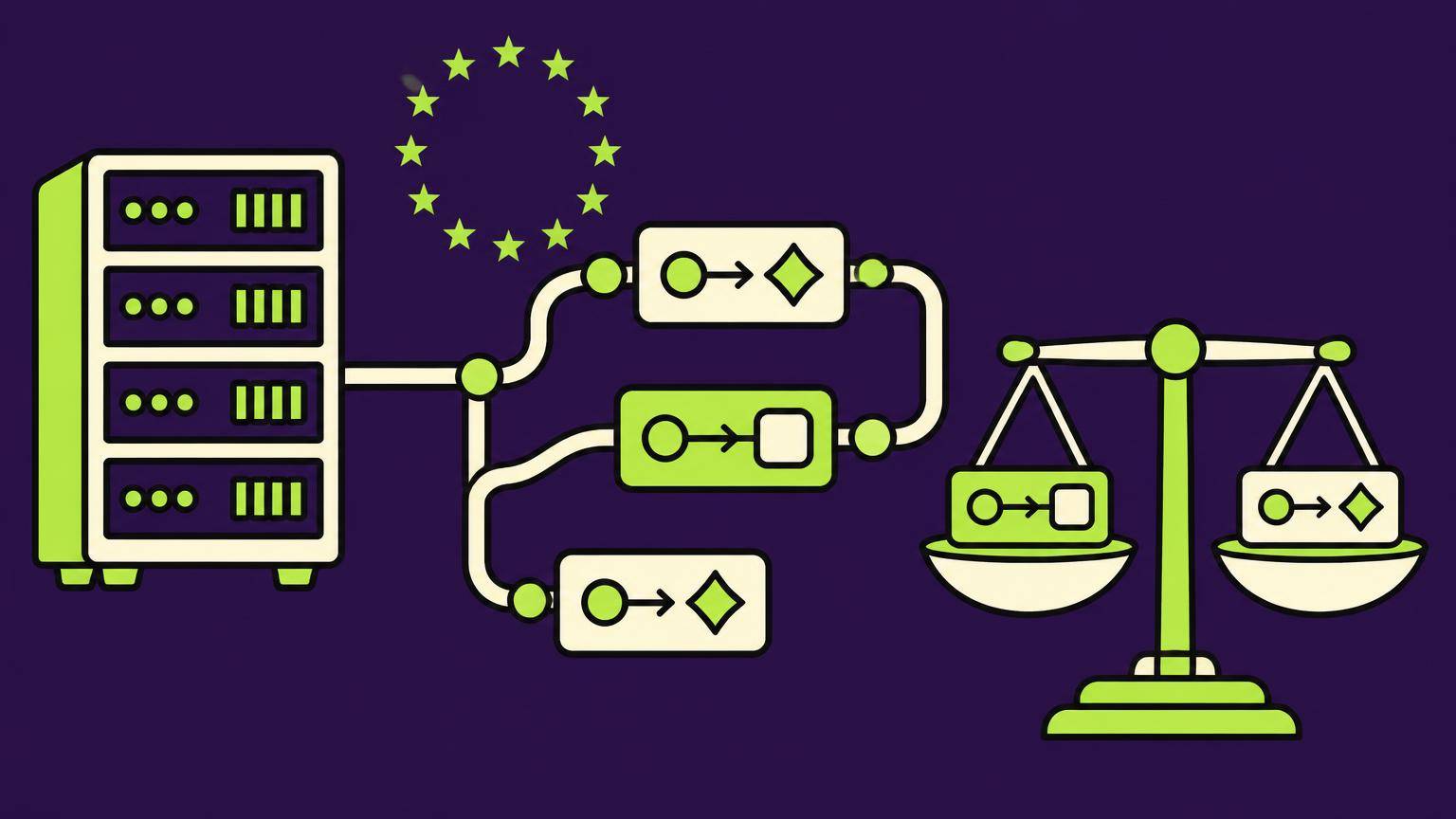
Table of Contents
Automation with AI building blocks is quick to build. The questions afterwards are slower: where does the data run? May we use the tool this way? And which EU AI Act obligations actually apply to us? Sovereignty is not a product feature but the sum of decisions about operations, licensing and responsibility. This article is orientation, not legal advice.
n8n: self-host, but read the licence
n8n can run on your own infrastructure. The free Community edition is under the "Sustainable Use License". According to n8n's help centre, use is free as long as only people in your own organisation create or edit workflows, including when you run workflows for clients, provided they cannot open the editor or change the logic. You need a commercial licence, among other cases, when outsiders configure workflows, explicitly including via the API, MCP or an agent acting for them, or when you offer n8n as a service.
Make: cloud with a selectable data centre
Make is a cloud service. According to Make's help centre, each organisation selects its data centre location, currently the US or the EU. That is an important building block but does not replace reviewing data processing terms, sub-processors and the connected AI models: a workflow in an EU data centre can still send data to a model outside the EU.
Comparison for the decision
| Criterion | Self-hosted n8n | Make (EU region) |
|---|---|---|
| Data location | your own infrastructure | provider's EU data centre |
| Operations effort | your team handles updates, backups, security | provider |
| Licensing | check Sustainable Use License | subscription terms |
| AI models | free choice, including self-hosted | via connected services |
The EU AI Act after the Digital Omnibus
Regulation (EU) 2026/1744 ("Digital Omnibus on AI") was published in the Official Journal on 24 July 2026 and entered into force on 27 July 2026. It postpones the high-risk obligations: for stand-alone Annex III systems (such as employment, education, critical infrastructure) to 2 December 2027, and for AI in regulated products under Annex I to 2 August 2028.
Typical marketing automation rarely falls into the high-risk category. More relevant are usually the Article 50 transparency obligations, such as labelling certain AI-generated content, plus data protection. A workflow that pre-screens job applications, however, quickly lands in employment. Classification depends on the purpose, not the tool. More: EU AI Act Article 50 and the EU AI Act check.
Next step
List your automations in three columns: data location, model used, purpose. That shows where licensing, data protection or the AI Act need closer review, ideally with your legal counsel. For a scoped trial: agent pilot.
Sources: n8n: Which license do I need?; n8n Docs: Community license; Make Help: Organizations; EUR-Lex: Regulation (EU) 2026/1744; European Commission: AI Omnibus enters into force.
Frequently Asked Questions
What is "Sovereign AI Automation: n8n, Make and the EU AI Act" about?
Self-host or EU data centre? Licensing, data location and the new AI Act deadlines after the Digital Omnibus, put into context.
n8n: self-host, but read the licence: what matters?
n8n can run on your own infrastructure. The free Community edition is under the "Sustainable Use License". According to n8n's help centre, use is free as long as only people in your own organisation create or edit workflows, including when you run workflows for clients, provided they cannot open the editor or change the logic.
Make: cloud with a selectable data centre: what matters?
Make is a cloud service. According to Make's help centre, each organisation selects its data centre location, currently the US or the EU. That is an important building block but does not replace reviewing data processing terms, sub-processors and the connected AI models: a workflow in an EU data centre can still send data to a model outside the EU.
The EU AI Act after the Digital Omnibus: what matters?
Regulation (EU) 2026/1744 ("Digital Omnibus on AI") was published in the Official Journal on 24 July 2026 and entered into force on 27 July 2026. It postpones the high-risk obligations: for stand-alone Annex III systems (such as employment, education, critical infrastructure) to 2 December 2027, and for AI in regulated products under Annex I to 2 August 2028.
Related Articles
You might also be interested in these posts
 Strategy
Labelling AI Content: What the EU AI Act Requires — and What It Does Not
Chatbot, avatar, photorealistic image: a clear line on Article 50 transparency duties, plus content credentials and the process behind them.
 Strategy
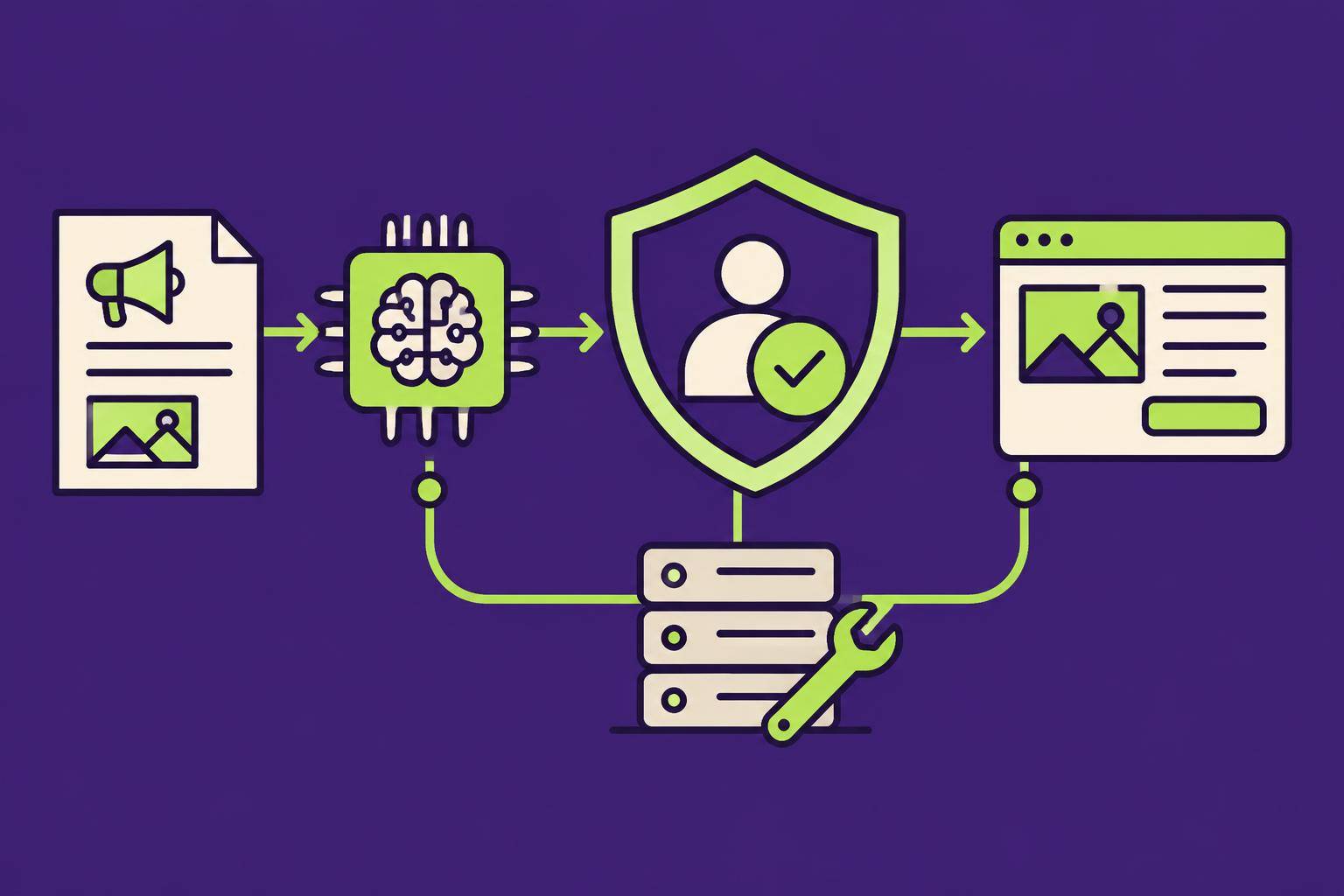
AI Cybersecurity: Operating Safer Marketing Systems
The PHP incident shows why AI alone cannot protect a business. How marketing and IT can control agent permissions, updates and approvals together.
 Strategy
EU AI Act Article 50: What Marketing Must Label Since 2 August 2026
Chatbots, synthetic media, deepfakes: transparency duties in practice – with a decision tree and ready-to-use wording.