The New Bottleneck in IT Organisations: From Implementation to Vision
In short
When implementation takes days instead of months, unclear product vision, slow approvals and missing judgement surface. How teams tier approvals by risk and measure the real bottleneck.
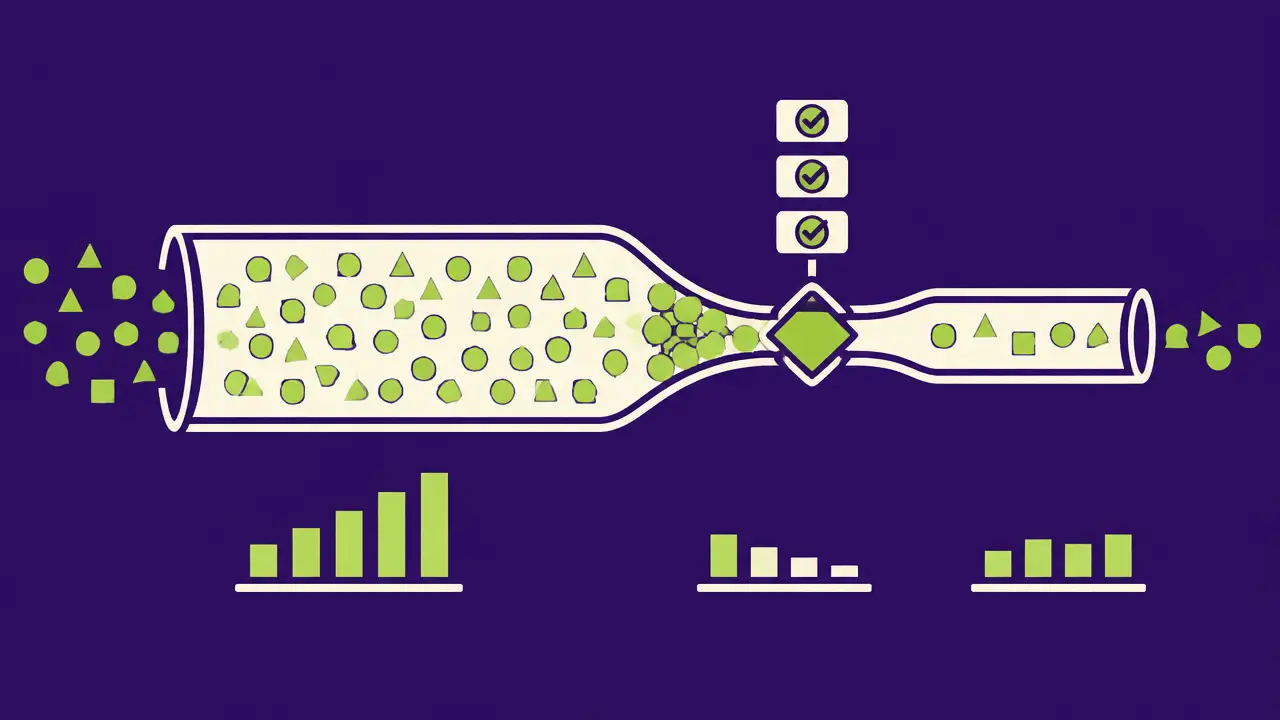
Table of Contents
For years the answer to "why does this take so long?" was the same: not enough engineering capacity. The backlog was full, implementation was the bottleneck, and every prioritisation was a fight over developer hours.
With agentic development that bottleneck does not disappear entirely — but it loses its dominance. And underneath it something appears that waiting time previously concealed: many organisations do not know precisely enough what they actually want.
1) The Bottleneck Moves — Three Times
Before: idea → queue → implementation (months) → release.
Now: idea → implementation (days) → approval (weeks) → release.
When implementation time shrinks, it becomes visible how much time previously sat in queues. Three new constraints emerge:
- Unclear product vision. An agent needs a decision where a ticket used to contain a statement of intent. "Make it more user-friendly" is not a mandate.
- Approval processes from another era. Four committees on a two-week cycle were defensible when implementation took months. At two days of implementation they are the main cost block.
- Missing judgement in design. When ten variants appear within an hour, production capacity is not the constraint — the ability to choose with justification is.
2) Why Unclear Vision Is Now More Expensive Than Before
Ambiguity used to manifest as delay: clarifying questions, alignment meetings, an interim result after three weeks. Today it manifests as execution. The agent fills gaps with plausible assumptions and delivers something finished — just not what was wanted.
That shifts effort from implementation into mandate definition. A usable mandate contains at minimum: audience, problem to solve, scope boundaries (what is explicitly out), success criterion and the hard limits — legal, technical, brand.
3) Adapting Approvals to the New Cadence
The answer is not abolishing approvals. It is tiering them by risk:
| Risk | Example | Approval |
|---|---|---|
| Low | internal view, read access | team, in passing |
| Medium | customer-visible change without commitments | one named person, 24 h |
| High | prices, claims, payment paths, personal data | formal approval with record |
The decisive step is classification up front. Route every change through the high-risk path and speed gains become arithmetically worthless — while teams learn to bypass the process.
4) The Skills That Are Now Scarce
What organisations need in this phase is not more implementation capacity but:
- Problem framing. Describing a problem so it can be solved verifiably.
- Judgement among variants. Choosing from five drafts with justification instead of gut feel — see Differential Evaluation.
- Scoping discipline. Deciding what will not be built. At low creation cost this is the hardest discipline, because every "let's just add it" creates permanent maintenance.
- Operational ownership. Who maintains, updates and shuts down what was built in two days?
5) The Uncomfortable Side Effect: More Software Means More Operations
Falling creation cost increases demand — that is the Jevons paradox applied to software. The consequence is not less work but a different distribution: less creation, more evaluation, more operations, more permission management.
In practice: every new tool needs an owner, an access model and an expiry date. Without those three, you get exactly the sprawl that standard software was supposed to prevent.
6) A One-Week Diagnosis
A simple test shows where the bottleneck actually sits:
- Take ten completed initiatives.
- Measure three durations each: clarification, implementation, approval.
- Sum and compare.
If implementation is under a third of total duration, more capacity is the wrong answer. Then mandate clarity and approval are the work — and that is where the faster gain sits too.
Conclusion
When implementation becomes cheap, clarity decides. Organisations that sharpen product vision, tier approvals by risk and build selection competence convert technical speed into outcomes. Everyone else gets faster implementation of unclear wishes.
Further reading: how this shift plays out in development practice is covered in Full Autonomy Instead of Autocomplete.
Frequently Asked Questions
What is "The New Bottleneck in IT Organisations: From Implementation to Vision" about?
When implementation takes days instead of months, unclear product vision, slow approvals and missing judgement surface. How teams tier approvals by risk and measure the real bottleneck.
The Bottleneck Moves — Three Times: what matters?
Before: idea → queue → implementation (months) → release. Now: idea → implementation (days) → approval (weeks) → release. When implementation time shrinks, it becomes visible how much time previously sat in queues.
Why Unclear Vision Is Now More Expensive Than Before: what matters?
Ambiguity used to manifest as delay: clarifying questions, alignment meetings, an interim result after three weeks. Today it manifests as execution. The agent fills gaps with plausible assumptions and delivers something finished — just not what was wanted.
Adapting Approvals to the New Cadence: what matters?
The answer is not abolishing approvals. It is tiering them by risk: The decisive step is classification up front. Route every change through the high-risk path and speed gains become arithmetically worthless — while teams learn to bypass the process.
Related Articles
You might also be interested in these posts
 Strategy
Full Autonomy Instead of Autocomplete: The Shift to Agentic Engineering
From code suggestions to parallel sub-agents: what changed technically, why "more agents" solves nothing and how teams rebuild workflows for delegation — including permissions, acceptance and cost caps.
 Strategy
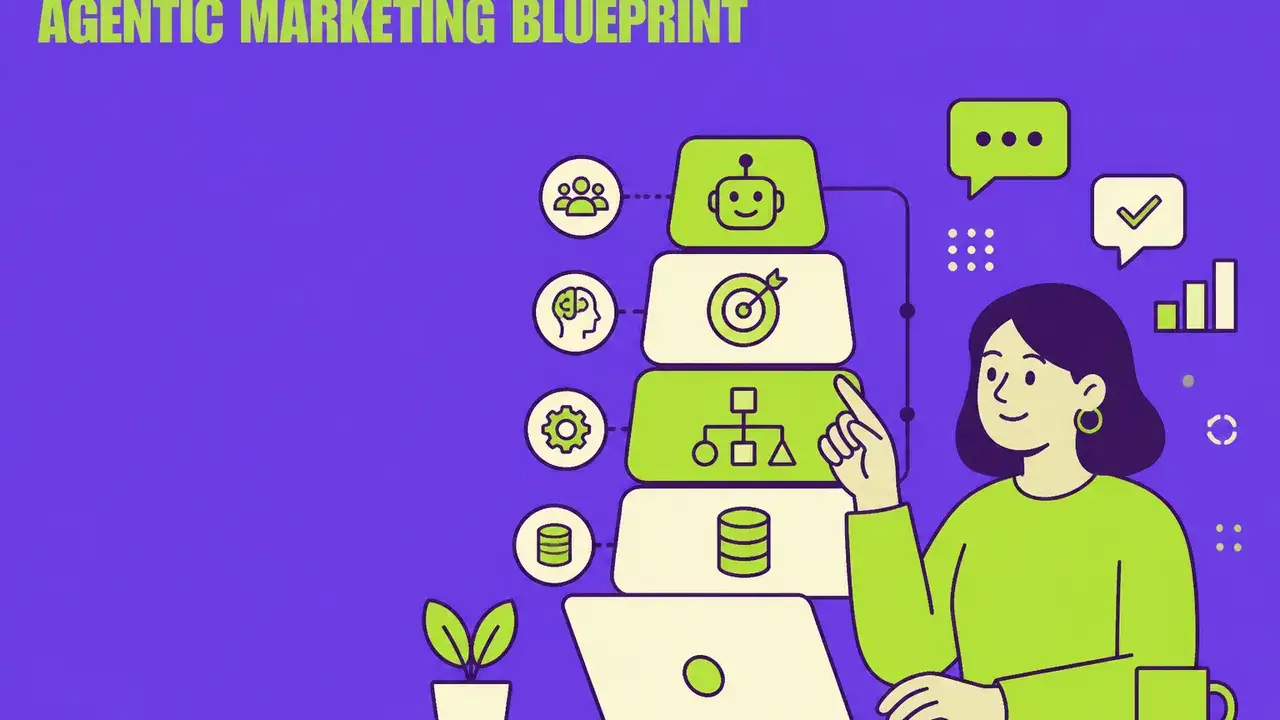
Agentic Marketing Blueprint: The Four Layers of Working Agent Teams
Knowledge, tools, agents, control: the reference architecture marketing organisations converge on in 2026 — including sequence, roles and metrics.
 Strategy
Vibe Coding vs. Software Architecture: Why Governance and Taste Matter More
Unreviewed vibe coding damages mature systems: duplicated logic, broken layers, tests without evidentiary value. Which guardrails actually hold in AI-assisted development — and where the style fits.