Legacy Refactoring and Code Translation: What Agents Really Deliver
In short
Python to Rust in days rather than months: how agentic porting works in practice, why factors of 10 to 40 are not transferable and which tests, benchmarks and ownership must be settled first.
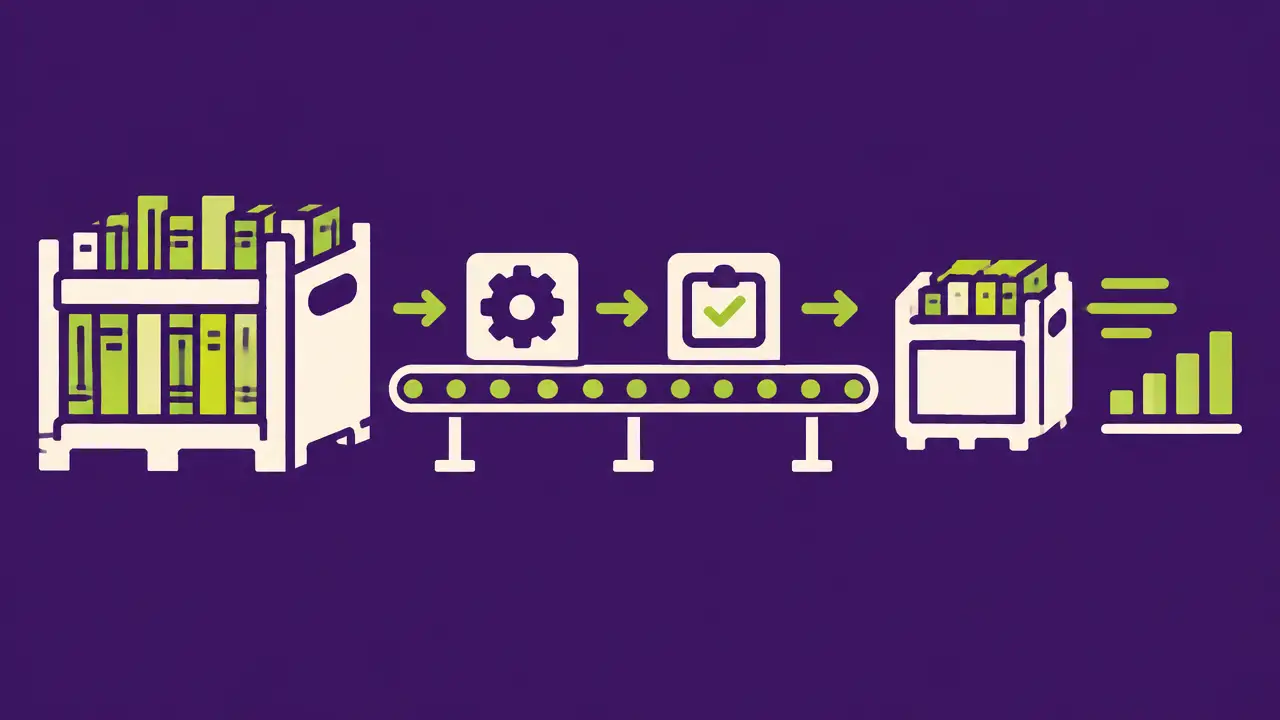
Table of Contents
Replacing old libraries was long a decision against switching languages: rewriting Python logic in Rust meant months of ramp-up, specialist knowledge and a solid test net. Usually it stayed an intention.
Agents change that calculation — not because they write perfect code, but because they know syntax, idioms, build systems and compiler feedback and iterate from it. Effort shifts from creation to evaluation. That is exactly where it is decided whether a refactoring is a gain or a risk.
1) What Agentic Porting Looks Like in Practice
The sequence is remarkably consistent:
- Pin down behaviour. Before anything is translated, a test suite against the existing implementation is built, fed with real input data.
- Define the cut. What gets ported is the compute-heavy core, not the whole application. The external interface stays stable.
- Translate and iterate. The agent produces the target implementation and works through compiler and test failures.
- Benchmark against the original. Same inputs, realistic load, documented numbers.
- Review by someone with language experience. Memory behaviour, concurrency, error handling.
The glossary calls this pattern Polyglot Agentic Programming: producing code in a language you have no routine in — with responsibility shifted, not removed.
2) About Those Performance Numbers
Factors of ten to forty circulate around such projects. Those figures are plausible but not transferable: they come from cases where an interpreted language with high call overhead was replaced by compiled code with better memory locality. Where vectorised libraries are already in use, the gain is far smaller — sometimes a few percent.
Only one number is therefore defensible: your own benchmark, measured on your data, under your load, before and after. Everything else is marketing — even when it sounds technically sound.
Where the effort typically pays off:
- Batch processing of large asset or data volumes
- Image and video preparation in production pipelines
- Compute-heavy preprocessing ahead of model calls
- Services under permanently high request load, where compute time is infrastructure cost
3) Cost Effects Beyond Runtime
The performance gain is only part of it. Two further effects are often larger in practice:
- Infrastructure. When a batch run takes twenty minutes instead of four hours, compute cost drops along with the need to hold capacity for peaks.
- Process. A run completing in minutes can happen several times a day. That changes not the technology but the way of working — corrections become possible where a night used to sit in between.
Against that stands a line item rarely calculated: maintenance in a language nobody on the team reads. That is not a footnote but the decisive cost over the lifetime.
4) The Risks That Actually Matter
- Functional equivalence without load equivalence. Tests green, behaviour under concurrency or at memory limits different. Without load tests this stays undetected.
- Acceptance without language competence. Someone who cannot read the target code cannot judge security questions. Review by experienced people is not a formality.
- Maintenance debt. Updating dependencies, closing vulnerabilities, diagnosing failures — all in a language without internal ownership.
- Partial porting without a clear boundary. Two implementations of the same logic in two languages is the worst of all states.
The countermeasure is unspectacular: before porting starts, it is settled who maintains the target code permanently — by name.
5) A Bounded Four-Week Approach
- Week 1: select candidates. Criteria: clearly bounded, measurably compute-heavy, stable interface, ownership settled. Measure baselines.
- Week 2: build the test suite against the original on real data, including edge cases and error paths.
- Week 3: agentic port, iterating over tests and benchmarks.
- Week 4: review by an experienced engineer, load test, decision with documented numbers: replace, run in parallel or drop.
A rejected attempt is not a failure if the test suite remains — it is the most valuable part of the next restructuring.
Conclusion
Agentic code translation turns legacy refactoring from a capacity question into an evaluation question. The gain is real but not universal: it depends on the starting point and is only provable with your own benchmark. Pin down behaviour first, run load tests and settle ownership, and you capture performance and cost without inheriting an unreadable component.
Further reading: why architectural guardrails matter more in agentic development is covered in Vibe Coding vs. Software Architecture.
Frequently Asked Questions
What is "Legacy Refactoring and Code Translation: What Agents Really Deliver" about?
Python to Rust in days rather than months: how agentic porting works in practice, why factors of 10 to 40 are not transferable and which tests, benchmarks and ownership must be settled first.
What Agentic Porting Looks Like in Practice: what matters?
The sequence is remarkably consistent: Pin down behaviour. Before anything is translated, a test suite against the existing implementation is built, fed with real input data.
About Those Performance Numbers: what matters?
Factors of ten to forty circulate around such projects. Those figures are plausible but not transferable: they come from cases where an interpreted language with high call overhead was replaced by compiled code with better memory locality.
Cost Effects Beyond Runtime: what matters?
The performance gain is only part of it. Two further effects are often larger in practice: Infrastructure. When a batch run takes twenty minutes instead of four hours, compute cost drops along with the need to hold capacity for peaks.
Related Articles
You might also be interested in these posts
 Tools & Technology
The Agentic Stack 2026: 20 Tools That Carry Agentic Development
Supabase, Vercel, Inngest, Langfuse, Attio and 15 more: the five layers of an agentic stack, what each tool does, where the limits are — and four criteria for your own selection.
 Tools & Technology
The Agentic Stack 2026, Part 2: 20 More Tools for Memory, Quality and Execution
Pinecone, Weaviate, Zep, LiteLLM, Braintrust, Composio and 14 more: the layers you only need once a prototype goes live — with limits, sources and four selection questions.
 Tools & Technology
Grok Bot: xAI's AI Teammates With Their Own Computer
In beta since 11 August 2026: bots with their own cloud computer sign in to your tools and finish tasks. What that means for marketing, permissions and Grokipedia.