AI Search Optimization (AIO): The End of Traditional SEO?
In short
Google AI Mode, Perplexity and ChatGPT Search are fundamentally changing search. How brands optimize their content for AI search engines – the complete AIO guide.
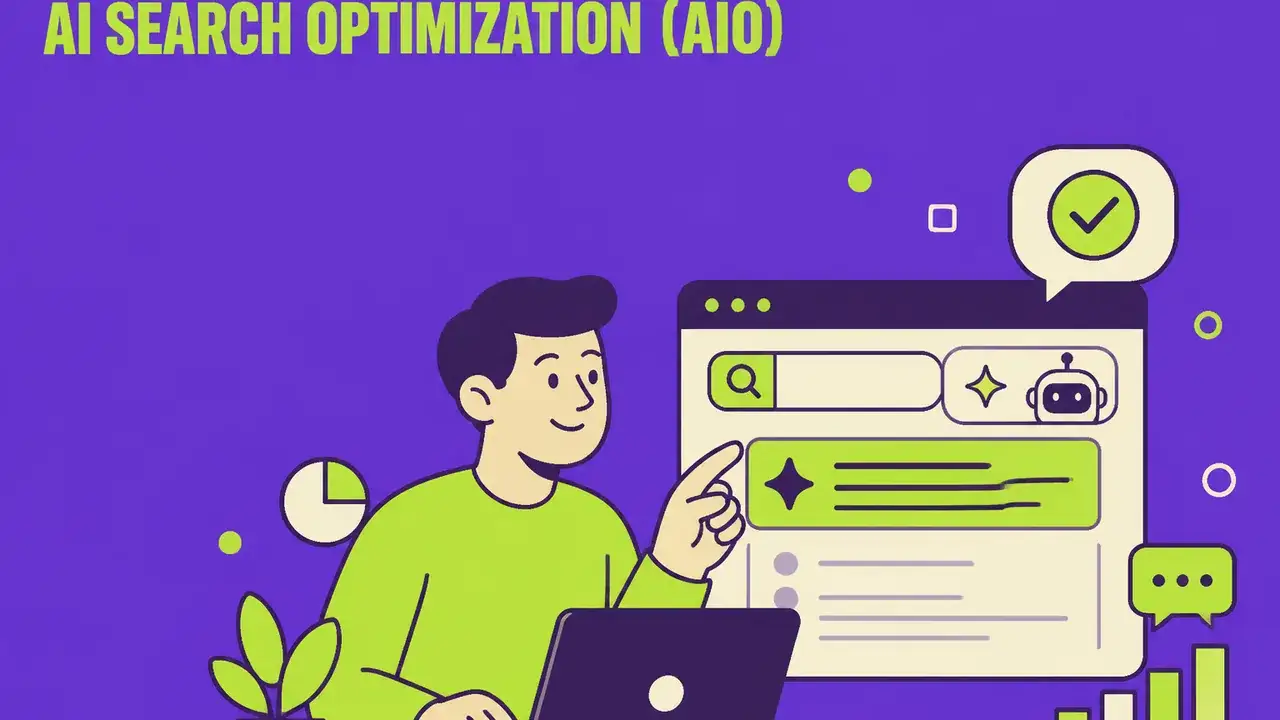
AI Search Optimization (AIO): The End of Traditional SEO?
The digital marketing landscape has been undergoing an unprecedented transformation for some time now. What was once known as traditional Search Engine Optimization (SEO) is being redefined under the influence of advanced Artificial Intelligence (AI). In particular, the introduction of Google AI Mode in search, based on algorithms like Gemini 3, the establishment of platforms like Perplexity as serious competitors, and the integration of ChatGPT into search results have fundamentally shifted the rules of the game. These developments raise the central question: Are we witnessing the end of traditional SEO as we knew it, and does AI Search Optimization (AIO) mark the beginning of a new era?
The Evolution of Search: From Keywords to Intent and Context
Traditional SEO primarily focused on optimizing keywords, backlinks, and technical aspects to achieve high rankings in the organic search results of major search engines, foremost Google. The goal was to drive users from the Search Engine Results Page (SERP) to one's own website. However, with the advent of generative AI, the focus has shifted from individual keywords to understanding the entire search intent and the context behind a query. The new AI models can comprehend complex questions, establish connections, and present tailored, concise answers directly in the search results, often without the need for a click to an external website. This has led to the much-discussed "Zero-Click Search," which has significant implications for online visibility.
Google AI Mode: Gemini 3 and the New SERP Reality
With the introduction of Google AI Mode and the successive integration of models like Gemini 3 into search algorithms, Google has initiated a paradigm shift. Instead of a simple list of links, users now often see AI-generated summaries, known as snippets or answer boxes, which provide complete answers directly on the SERP. These answers are synthesized from a variety of sources, with the credibility and relevance of the content evaluated by the AI.
What does this mean for marketers?
- Content Quality and Authority: The depth, accuracy, and authority of content become even more crucial. AI favors sources deemed trustworthy and comprehensive.
- Structured Data and Semantics: Providing well-structured data that clarifies the semantics of the content helps AI better understand and process information. Schema markup becomes indispensable.
- Natural Language and Conversation: Content must be increasingly optimized for natural language – both for questions and answers – as AI handles conversational search queries ever more effectively.
- Omnichannel Approach: The signals that AI uses for evaluation can extend beyond one's own website to include social media, forums, or e-commerce platforms.
Perplexity and ChatGPT Search: New Search Landscapes Are Forming
Beyond Google, other players are entering the search market, relying entirely on AI-based approaches. Perplexity, for instance, positions itself as an "Answer Engine" that not only provides answers but also transparently references its sources. This creates a new form of trust and transparency in the search process. ChatGPT, originally designed as a language model, has also expanded its capabilities in information retrieval and is increasingly used as a search tool, especially for complex questions or idea generation.
These alternative search platforms compel marketing strategists to diversify their reach strategies:
- Presence on Third-Party Platforms: Content must be optimized not only for one's own website but also for display and aggregation on platforms like Perplexity or Bing Chat (integrated with GPT-4.5/5).
- Content Syndication: Strategic distribution and syndication of content can increase visibility across various AI-generated search paths.
- Influence on Source Selection: Since Perplexity and similar services explicitly name sources, the strategy may be to become a top source for specific topics to appear in their citations.
AIO Strategies: The Way Forward
In light of these changes, a rethinking is necessary. AIO is not simply a new acronym but stands for a holistic strategy aimed at maximizing visibility within AI-driven search environments. It combines core principles of traditional SEO with new requirements arising from AI.
Table: Traditional SEO vs. AIO
| Feature | Traditional SEO | AIO (AI Search Optimization) |
|---|---|---|
| Focus | Keywords, technical aspects, backlinks | Intent, context, semantics, data quality, user intent |
| Goal | Clicks to one's own website | Direct answers in SERP, building trust, zero-clicks |
| Content | Search engine friendly, keyword-dense | Authoritative, comprehensive, precise, conversational, multi-format |
| Technique | Crawling & indexing, page load speed | Structured Data, Knowledge Graph Integration, API Optimization |
| Metrics | Rankings, traffic, conversions | Visibility in Answer Boxes, Featured Snippets, Direct Answers, Brand Mentions |
| Platforms | Google, Bing, Yahoo | Google AI Mode, Perplexity, ChatGPT Search, voice assistants |
Geospatial AI Optimization (GEO) and the Zero-Click Impact
An increasingly important subfield of AIO is Geospatial AI Optimization (GEO). This involves optimizing content and business data so that AI models can accurately capture and output them for local search queries and geographically specific information. Gemini 3 and Llama 4, in particular, are extremely powerful in processing and understanding geographical contexts. This is crucial for physical businesses and service providers, for example.
The aforementioned Zero-Click Impact is one of the biggest challenges. If users get their answers directly in the SERP, the click-through rate to the underlying websites decreases. However, this does not mean that visibility becomes irrelevant; rather, the value placed on visibility shifts:
- Brand Awareness: Even without a click, presence in Featured Snippets or AI-generated results contributes to brand awareness and authority.
- Direct Conversions: For certain queries (e.g., "opening hours [store] today"), the direct display of an answer can already constitute the conversion.
- Building Trust: Being a cited source in an AI answer establishes one as an expert, which builds trust in the long run and can indirectly lead to visits or business deals.
Agentic AI and the MCP Model (Model Context Protocol)
ജെThe future of AIO will be strongly shaped by Agentic AI. Autonomous AI agents, capable of performing complex tasks and research independently, will further personalize and automate search. These agents do not only act as passive answer providers but also as active problem solvers and recommenders.
For marketing experts, this means that content must not only be optimized for static search queries but also for the dynamic interactions of these agents. This is where the MCP model (Model Context Protocol) comes into play. It defines how information must be structured and semantically enriched so that AI models can precisely understand, process, and incorporate it into their decision-making. The MCP is becoming the standard for optimized data communication with agents and AI systems.
Key points of MCP for AIO:
- Standardized Metadata: Beyond traditional schema markups, more specific, AI-friendly metadata will be needed.
- Contextual Enrichment: Information must not exist in isolation but must be embedded within its relevant context for correct interpretation by the AI.
- Data Governance: Ensuring data integrity, timeliness, and credibility, as agents rely on this data.
Conclusion: AIO is not the end, but the evolution of SEO
Traditional SEO, as we knew it, may indeed be reaching its limits in its pure form. However, instead of speaking of an "end," we are experiencing a fundamental evolution. AI Search Optimization (AIO) is the logical and necessary progression to remain relevant in the new era of AI-driven search. It requires a deep understanding of intent, context, semantics, and the functioning of AI models such as GPT-5, GPT-5.6 Terra, Claude 4.5/4.6, Gemini 3, and Llama 4. Marketers must move away from pure keyword optimization and adopt a holistic approach that prioritizes quality, authority, structure, and the provision of multi-format, agent-friendly content. The future of visibility lies in the ability to communicate directly with intelligent algorithms and meet their requirements.
How Davies Meyer supports you: Davies Meyer GmbH is your partner for transformation in AI marketing. We develop customized AIO strategies, implement MCP-compliant content structures, and optimize your digital presence for the era of agentic AI. Contact us to develop your AIO strategy and secure your visibility long-term.
Frequently Asked Questions
What is "AI Search Optimization (AIO): The End of Traditional SEO" about?
Google AI Mode, Perplexity and ChatGPT Search are fundamentally changing search. How brands optimize their content for AI search engines – the complete AIO guide.
AI Search Optimization (AIO): The End of Traditional SEO?
The digital marketing landscape has been undergoing an unprecedented transformation for some time now. What was once known as traditional Search Engine Optimization (SEO) is being redefined under the influence of advanced Artificial Intelligence (AI).
The Evolution of Search: From Keywords to Intent and Context: what matters?
Traditional SEO primarily focused on optimizing keywords, backlinks, and technical aspects to achieve high rankings in the organic search results of major search engines, foremost Google.
Google AI Mode: Gemini 3 and the New SERP Reality: what matters?
With the introduction of Google AI Mode and the successive integration of models like Gemini 3 into search algorithms, Google has initiated a paradigm shift. Instead of a simple list of links, users now often see AI-generated summaries, known as snippets or answer boxes, which provide complete answers directly on the SERP.
Related Articles
You might also be interested in these posts
 Strategy
GEO: Generative Engine Optimization – The End of SEO As We Know It
How to optimize your content for ChatGPT, Perplexity and Google AI Overviews. The ultimate guide to GEO and AEO for marketing professionals in 2025.
 Strategy
Google AI Mode & the Death of 10 Blue Links – GEO as the New SEO Discipline
Google AI Mode replaces traditional search with AI answers. Learn how Generative Engine Optimization (GEO) works and how to secure your brand visibility in the AI era.
 Strategy
Visibility in AI Search and Agentic Commerce: What Counts in 2026 Instead of Rankings
Citation share instead of click-through rate, product attributes instead of images: the complete guide to visibility in AI answers and with shopping agents.