Personalization at Scale: How AI Finally Makes 1:1 Marketing Possible
In short
Predictive audiences, real-time DCO and dynamic customer journeys – how AI models in 2026 enable true 1:1 personalization for millions of users.
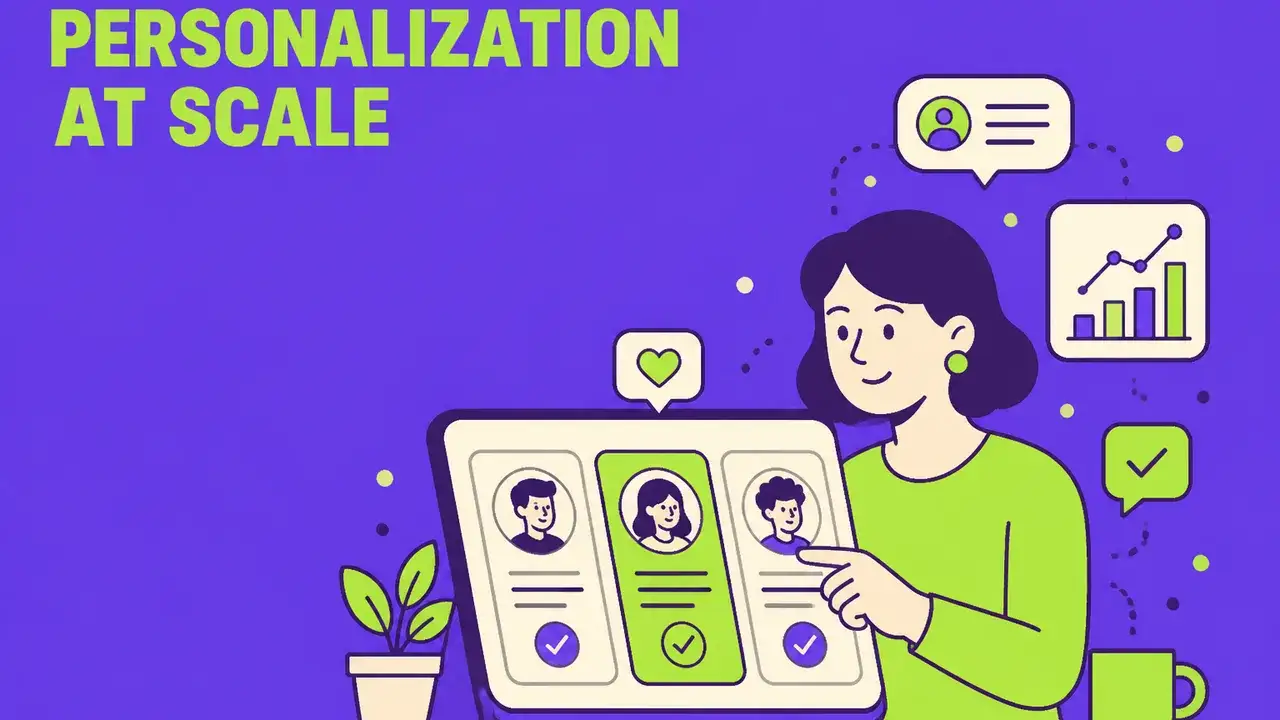
Personalization at Scale: How AI Finally Makes 1:1 Marketing Possible
For years, the marketing world dreamed of true 1:1 marketing – the ability to engage each individual customer with the exact right message at the right time. The vision was clear, yet the technological hurdles long seemed insurmountable. Manual segmentation approaches, rigid rules, and the sheer volume of data made hyper-personalization at scale a utopian concept. However, with the rapid advancement of Artificial Intelligence, and particularly Generative AI, this paradigm has fundamentally shifted. In March 2026, we are witnessing an era where 1:1 marketing is no longer a distant future vision but an actionable reality, thanks to AI-driven processes.
The Evolution of Personalization: From Segments to Individuals
Early steps towards personalization were characterized by broad segmentation. Customers were grouped into demographic categories based on age, gender, or geographic location. Later, behavioral data was incorporated, and marketers spoke of personas – archetypal customer profiles. Yet, even the finest segments still comprised thousands of individuals whose needs, preferences, and current context varied significantly. The dilemma was obvious: how can one address millions of customers so individually that it feels like speaking to each one, without losing oversight or increasing complexity beyond measure?
The answer lies in AI's ability to identify patterns in vast amounts of data, make predictions, and dynamically adapt content – all in real-time and at any conceivable scale. This is the foundation for what we now call Agentic AI Marketing: autonomous, data-driven workflows that continuously optimize themselves and create individualized customer experiences.
Dynamic Creative Optimization (DCO) Reimagined with Generative AI
Traditional DCO (Dynamic Creative Optimization) already allowed for some adaptation of ad creatives based on predefined rules and pre-existing assets. For example, the product image or call-to-action could be changed depending on previous browsing behavior. With Generative AI, as we experience it today in models like GPT-5.6 Terra or Claude 4.6, the spectrum of DCO dramatically expands.
Imagine your advertisement or email not just adjusting an image or a headline but generating entirely new text passages in real-time, varying the tone, integrating current weather data, or referring to a recently read blog post by the user. GPT-5.6 Terra, for instance, can generate an email from a set of product features and customer data that perfectly matches the customer's communication style and highlights precisely the benefits most relevant to them. This goes far beyond merely swapping components; it's the coherent creation of new marketing content that is semantically and stylistically perfectly tailored to the recipient.
Examples of AI-driven DCO applications:
- E-commerce: A customer recently showed interest in hiking boots. The next ad or email not only displays hiking boots but promotes an outdoor app with personalized route suggestions, offers matching socks for shoes previously added to the cart, and generates text emphasizing the feeling of freedom and nature experiences – all based on the user's identified interests and current weather in their area.
- Financial Services: A potential customer who has been researching retirement provisions on the website receives a personalized landing page. The text explains complex financial products in a language understandable to them – playful and future-oriented for a younger user, with a focus on security and long-term stability for an older user. The graphics used are also individually generated and align with the respective user's life plan.
- Travel Industry: A user who searched for flights to Mallorca but hasn't booked yet receives not just a reminder but an offer for a hotel near a surf spot if their profile indicates an interest in water sports. The imagery and text of the ad are dynamically adjusted to highlight this specific incentive.
Predictive Audiences: The Future of Target Group Selection
Past is past. While traditional segmentation is based on what a user has done, Predictive Audiences, powered by models like Gemini 3 or Llama 4, enable forecasts about what a user will do. This is a fundamental shift from reactive to proactive marketing.
AI models analyze countless data points – from browsing behavior to purchase history, social interactions, to external factors like seasonal trends or overall economic indicators. They identify patterns and correlations that remained invisible to the human eye. Based on these insights, they can make precise predictions, such as:
- Which customers are highly likely to churn in the next 30 days (Churn Prediction).
- Which products a customer will buy next (Next Best Product).
- Which new customers will have the highest Lifetime Value (LTV).
- Which message will trigger the highest conversion impulse in a specific user.
Applications of Predictive Audiences:
- Churn Prevention: Before a customer even considers canceling a service, AI identifies them as at-risk for churn. The system then initiates autonomous campaigns for re-engagement, such as a special offer, a personalized service interview, or a hint about new features specifically tailored to their usage habits.
- Upselling/Cross-Selling: A customer who recently purchased a smartphone is identified by AI as a potential buyer of a smartwatch. The personalized communication focuses on device integration and the benefits of the entire ecosystem.
- Lead Scoring and Prioritization: AI evaluates new leads not only by demographic data but also by the probability of conversion, based on their website behavior and external data. Sales representatives thus receive a prioritized list and can optimally deploy their resources.
The ability to act before an event occurs, making predictions with precise probability, is the game-changer in marketing. This allows for more efficient resource allocation and proactively strengthens customer relationships.
Real-time Personalization: Context Makes the Difference
The ultimate discipline of personalization is real-time adaptation. Here, not only historical data is incorporated, but also the user's current context. Where are they? What time is it? What's the weather like? What device are they using? And most importantly: What are they doing right now?
Systems based on the MCP (Model-Context-Protocol) are capable of processing this real-time data and making marketing-relevant decisions within milliseconds. Here, data from Customer Data Platforms (CDPs) merges with real-time signals to form a dynamic and highly reactive marketing ecosystem.
The Role of CDPs and AI:
A modern Customer Data Platform (CDP) is the nerve center for 1:1 personalization. It collects, unifies, and organizes customer data from all channels – online, offline, transactions, interactions, demographic data. Without a centralized, clean, and accessible data foundation, even the most powerful AI cannot unleash its full potential. CDPs create the foundation by enabling a 360-degree view of the customer. AI then acts as the brain that interprets this data, recognizes patterns, and makes decisions.
Next-Best-Action (NBA) in Real-time:
The concept of Next-Best-Action (NBA) is elevated to a new level by AI. Instead of predefined paths, AI develops the optimal next interaction in real-time for each individual customer – be it a product recommendation, a blog article, a support offer, or a suitable discount coupon. This decision is made based on:
- All historical knowledge about the customer (from the CDP).
- The customer's current behavior (e.g., pages visited, search queries, time spent).
- The customer's current context (device, location, time, external factors).
- The overarching business goal (e.g., revenue increase, LTV optimization, churn reduction).
Examples of Real-time Personalization with NBA:
- Website: A user browses a product page for a laptop. They scroll several times to the technical specifications and dwell there for a long time. The AI system recognizes a high interest in technical details and displays a link to a detailed test report or a comparison tool in a pop-up or a section of the page, instead of a general discount offer.
- Mobile Marketing: A customer enters a brick-and-mortar store of a retail chain. Based on their purchase history (CDP data) and current location (real-time data), the app sends a push notification with a personalized coupon for a complementary product that might interest them.
- Customer Service: A customer contacts support via chat. The AI analyzes the request in real-time, accesses the customer's history, and immediately suggests the most relevant information, solutions, or even a personalized offer to the agent that could prevent potential disappointment.
Mastering Complexity: Orchestration and Autonomous Agents
Scaling 1:1 marketing requires not only powerful AI models but also intelligent orchestration of various marketing channels and measures. This is where autonomous AI agents come into play. Instead of defining rigid marketing automation rules that quickly reach their limits in complex scenarios, intelligent agents operate based on goals and data. They coordinate campaigns, optimize budgets, adapt content, and continuously learn from results.
An ensemble of agents could, for example, guide a customer across different touchpoints:
- An analysis agent identifies an increased churn risk.
- A content agent generates a personalized email with a specific offer.
- A channel agent decides whether this email or a push notification via app is the more effective channel.
- A budget agent allocates a small advertising budget, if necessary, for a retargeting campaign on social media that picks up the same topic.
- A feedback agent monitors the customer's reaction and informs the system about the success of the measure, which in turn improves the training of the models.
These agents work hand-in-hand, supported by central LLMs (Large Language Models) like GPT-5.6 Terra for content generation and specialized models for predictions, operating in a flexible and modular architecture. The goal is to design the entire marketing lifecycle proactively and self-optimizing, without requiring human interaction for every single decision.
Challenges and the Role of Humans
Despite impressive progress, challenges remain. Data privacy, data security, and the ethical use of AI are crucial. Transparency with the customer about how data is used, and the ability to opt out of personalization, must be ensured. Furthermore, the quality of the source data (garbage in, garbage out) remains a critical factor. A CDP must be properly maintained and correctly configured.
And the human? The role of the marketer is shifting. Instead of manually creating and maintaining campaigns, the modern marketer becomes an architect and strategist. They define business goals, oversee AI models, interpret results, refine prompts, and ensure that AI operates in accordance with brand values and ethical guidelines. Creativity and strategic thinking become even more important as AI takes over repetitive and data-intensive tasks.
Conclusion
The promise of 1:1 marketing, powered by AI technologies such as DCO, Predictive Audiences, and Real-time Personalization, supported by CDPs and driven by powerful LLMs, has finally come within reach. We have arrived at a point where technology enables the scale that was previously beyond human capabilities. Companies that strategically integrate these technologies will not only increase their efficiency but also build deeper, more relevant, and ultimately more profitable relationships with their customers. The future of marketing is individual, predictive, and real-time – a future where every customer receives the attention they deserve, tailored to their needs and context.
How Davies Meyer helps: With our expertise in Agentic AI Marketing and our profound knowledge of cutting-edge AI models, we develop individual strategies and implement solutions that make 1:1 marketing a reality in your company. We help you optimally utilize your CDP, elevate DCO campaigns to a new level, and establish Predictive Audiences for maximum marketing efficiency. Contact us today for a non-binding consultation and learn how we can transform your marketing.
Frequently Asked Questions
What is "Personalization at Scale: How AI Finally Makes 1:1 Marketing Possible" about?
Predictive audiences, real-time DCO and dynamic customer journeys – how AI models in 2026 enable true 1:1 personalization for millions of users.
Personalization at Scale: How AI Finally Makes 1:1 Marketing Possible: what matters?
For years, the marketing world dreamed of true 1:1 marketing – the ability to engage each individual customer with the exact right message at the right time. The vision was clear, yet the technological hurdles long seemed insurmountable.
The Evolution of Personalization: From Segments to Individuals: what matters?
Early steps towards personalization were characterized by broad segmentation. Customers were grouped into demographic categories based on age, gender, or geographic location.
Dynamic Creative Optimization (DCO) Reimagined with Generative AI: what matters?
Traditional DCO (Dynamic Creative Optimization) already allowed for some adaptation of ad creatives based on predefined rules and pre-existing assets. For example, the product image or call-to-action could be changed depending on previous browsing behavior.
Related Articles
You might also be interested in these posts
 Strategy
Search Console Generative AI Reports: How to Read AI Impressions Correctly
Rolled out worldwide since August 2026: what Google Search Console's new AI reports show, what they hide, and how to measure GEO properly anyway.
 Strategy
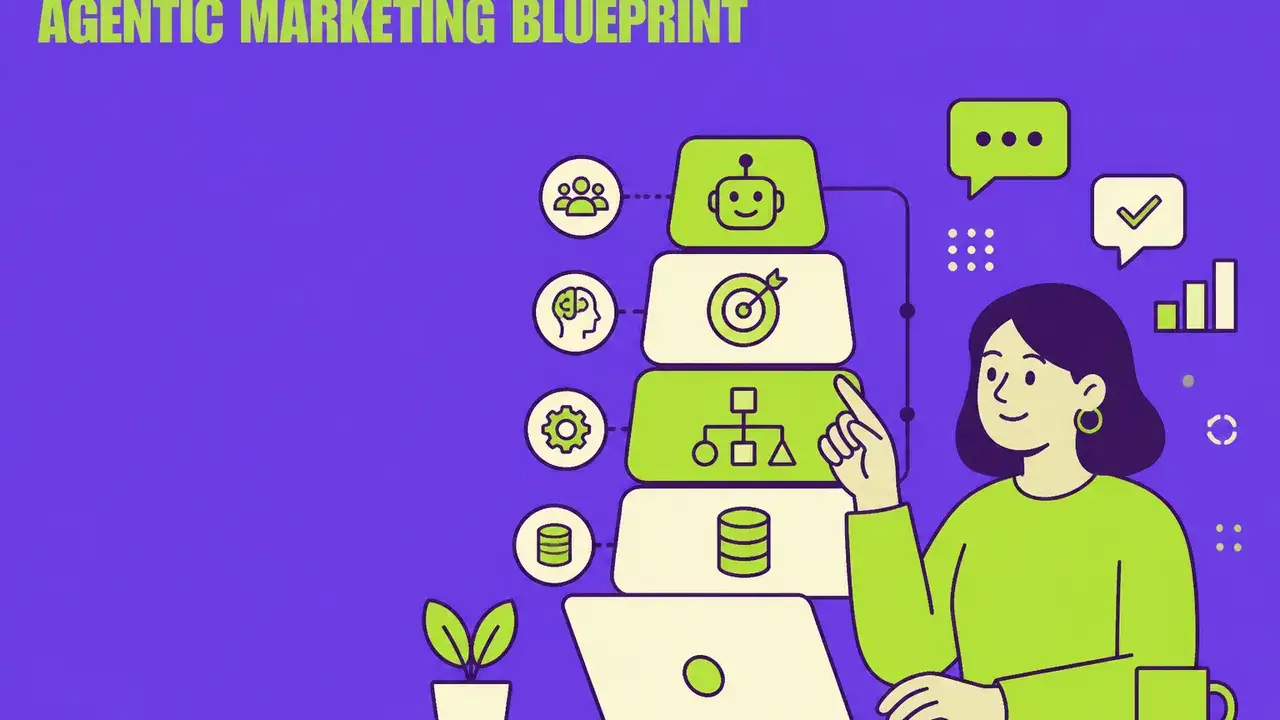
Agentic Marketing Blueprint: The Four Layers of Working Agent Teams
Knowledge, tools, agents, control: the reference architecture marketing organisations converge on in 2026 — including sequence, roles and metrics.
 Strategy
Cutting LLM Inference Cost: The Math Behind Tokens, Latency and Budget
Caching, model routing, context discipline: the full calculation marketing teams use to cut inference cost by 40 to 70 percent without losing quality.