Measuring AI Visibility: Mentions, Sources, Enquiries
In short
Four distinct AI visibility measures: mentions, source links, qualified visits and enquiries. Includes a practical measurement template.
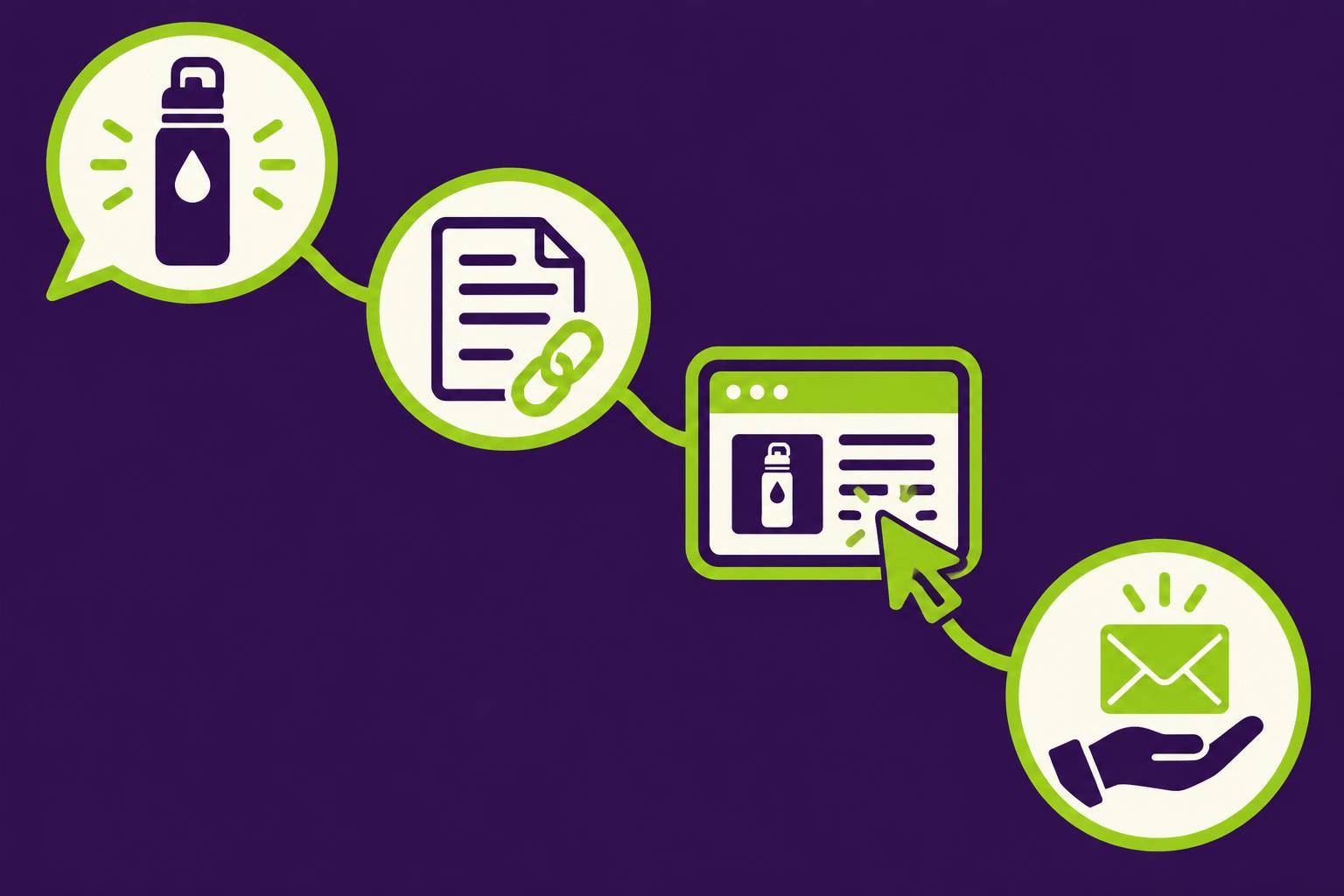
Table of Contents
Being mentioned in an AI answer and receiving a valuable enquiry are different outcomes. Source links, visits and a relevant next step sit between them. A visibility report should not collapse these stages into a single success number.
The current context
On 15 October 2026 Google described stronger inline linking in AI Mode and AI Overviews. Some measures are rolling out; others, including a prominent official-website area, are announced tests. This does not confirm full availability in Germany. On 27 October Coty announced a Brandlight partnership focused on AI visibility. Statements about pilot improvements come from the company, not independent effect measurement.
Our response is a working measurement template, not a growth forecast. It links GEO to the enquiry journey.
Four measures, four questions
| Stage | Question | Practical evidence | What it does not prove |
|---|---|---|---|
| Mention | Is the brand named in a fixed question set? | Dated response and environment | Recommendation, visit or demand |
| Source | Is a specific owned page linked? | Destination URL and surrounding passage | An actual click |
| Visit | Do relevant visitors reach that page? | Permitted measurement, referrer and behaviour | Purchase intent or the exact original question |
| Enquiry | Is a relevant project described? | Enquiry and known origin | Sole causation by the AI answer |
Record mentions and source links separately. An answer may name a brand while linking only third parties. Your specialist page may also be cited without a prominent brand mention.
A question set, not random screenshots
Choose questions across real decision stages: understand the problem, compare solutions, resolve limitations and select a provider. Keep language, region and testing environment as stable as possible. Record date, product and known login or personalisation state. A single screenshot is not a stable market share.
Fictional example: a B2B team tests questions about AI content with an approval process. It checks whether answers lead to a page with an operating process, constraints and direct enquiry form, not merely whether the brand is named. The selected questions are an editorial sample, not a representative measure of all demand.
A reusable measurement card
For each question store wording, date, environment, mention, source URL, factual accuracy, destination next step and known visit or enquiry signals. Use “unknown” when appropriate. Missing attribution is not automatically zero AI traffic.
Compare the same question set over time. Investigate whether the answer, source or owned page changed. If a campaign runs in parallel, increased enquiries cannot simply be credited to AI visibility. Fixed test questions support diagnosis; they are not a revenue-control group.
The destination is part of the outcome
A glossary page can answer a knowledge question without being a strong enquiry destination. The next step should match the reader's problem: a check, a defined collaboration or a form asking about the project. Not every page needs the same booking pressure.
Useful source pages explain claims, constraints, accountability and freshness. A benefits-only product page leaves important questions unresolved. A contact page alone rarely offers enough substantive explanation to cite. The two roles must work together.
Attribution without false precision
AI apps may open links without a useful referrer. Visitors switch devices or return directly later. Collect only permitted information, respect consent and supplement measurement with an open origin question during the conversation. Do not invent a complete personal journey to claim exact attribution.
Assess enquiry value from the proposed project. More clicks do not prove better opportunities. Keep known origin, self-report and technical measurement as distinct signals.
Our Creative Engineering perspective
Source presence begins with clear claims and reliable product information. Production and updates form a managed chain; outcomes are assessed by content and creative features. The practical goal is not the most flattering visibility score, but a traceable route from useful explanation to a relevant enquiry.
Sources and context
As of 4 November 2026. Product claims describe vendor statements, not independent evidence of outcomes. The working templates and recommendations are our editorial contribution.
Further reading and next step
Want to review a bounded workflow with us? Describe your project in the GEO-Sichtbarkeits-Check. Scope, timing and pricing are agreed after the initial conversation.
Frequently Asked Questions
What is "Measuring AI Visibility: Mentions, Sources, Enquiries" about?
Four distinct AI visibility measures: mentions, source links, qualified visits and enquiries. Includes a practical measurement template.
The current context: what matters?
On 15 October 2026 Google described stronger inline linking in AI Mode and AI Overviews. Some measures are rolling out; others, including a prominent official-website area, are announced tests.
Four measures, four questions: what matters?
Record mentions and source links separately. An answer may name a brand while linking only third parties. Your specialist page may also be cited without a prominent brand mention.
A question set, not random screenshots: what matters?
Choose questions across real decision stages: understand the problem, compare solutions, resolve limitations and select a provider. Keep language, region and testing environment as stable as possible.
Related Articles
You might also be interested in these posts
 Strategy
Visibility in AI Search and Agentic Commerce: What Counts in 2026 Instead of Rankings
Citation share instead of click-through rate, product attributes instead of images: the complete guide to visibility in AI answers and with shopping agents.
 Strategy
57% Disappear: Why Your Guides Drop Out of AI Search
An analysis of 2.4M citations shows: comparison pages survive, complete guides die after a month.
 Strategy
GEO-SFE: 17% More AI Citations Through Structure, Not Keywords
Structural feature engineering shows which page components AI engines actually cite – checklist included.
AI solutions by Davies Meyer
From an application to the right delivery
Good AI applications need brand knowledge, a clear idea and the right execution. Davies Meyer brings strategy, creativity, content production and technology together. Creative Engineering is our method for making that collaboration repeatable.
We take responsibility for the concept and quality.