AI Marketing Strategy 2025: The Ultimate Guide for Businesses
In short
Learn how to develop a future-proof AI strategy for your marketing, which trends you should not miss, and how to successfully implement AI in your company.
Why AI Marketing Becomes Essential in 2025
The integration of Artificial Intelligence in marketing is no longer an option – it's a strategic necessity. According to a recent McKinsey study, 72% of leading companies already use AI in at least one marketing area. Companies that want to remain competitive in 2025 must strategically and holistically integrate AI into their marketing processes.
The competitive pressure is increasing: While early adopters are already seeing significant efficiency gains, laggards risk falling behind. The good news: It's not too late, but time is pressing.
The Transformation of Modern Marketing
Marketing has fundamentally changed in recent years. Customers expect personalized experiences in real-time, across all channels. Without AI support, this expectation can simply no longer be met.
The numbers speak for themselves:
- 80% of consumers are more likely to buy from brands that offer personalized experiences
- Companies with advanced personalization achieve 20% more revenue
- AI-powered campaigns achieve 50% higher engagement rates on average
The Most Important AI Marketing Trends 2025
1. Real-time Hyper-personalization
AI enables customizing every single touchpoint individually to the user – in milliseconds. From dynamic email content that adapts when opened to personalized landing pages based on previous user behavior.
Practical example: An e-commerce company personalizes not only product recommendations but also price presentation, image selection, and tonality based on individual customer profiles. Result: 35% higher conversion rate.
2. Predictive Analytics & Customer Intelligence
Prediction models are the key to proactive marketing. They help anticipate customer behavior and act before the customer even knows what they need.
Concrete applications:
- Churn prediction: Identification of at-risk customers
- Next-best-action: Automated recommendations for optimal next customer interaction
- Demand forecasting: Precise prediction of demand and trends
- Customer Lifetime Value prediction: Prioritization of high-value leads
3. Content Automation & Generation
Automated content creation is becoming increasingly sophisticated. From product descriptions to social media posts to complete blog articles – AI can generate high-quality texts that are hardly distinguishable from human-created content.
Important: AI doesn't replace human creativity, it amplifies it. The best results are achieved by teams that use AI as a tool, not a replacement.
4. Intelligent Marketing Automation
Marketing Automation 2.0 goes far beyond simple email sequences:
- Dynamic customer journeys that adapt in real-time
- Automated A/B tests with self-optimization
- Cross-channel orchestration across all touchpoints
- Intelligent budget allocation based on performance
5. Conversational AI & Voice Marketing
Chatbots and voice assistants are becoming standard touchpoints. In 2025, an estimated 50% of all online searches will be voice-based. Marketing must be optimized for this new reality.
The 5-Step Plan for AI Integration
Step 1: Strategic Assessment (2-4 weeks)
Before investing in AI, analyze your current marketing processes:
- Which processes are time-intensive and repetitive?
- Where are the highest costs per output?
- Which decisions are made "from the gut" today?
- Where are you lacking data or insights?
Create a matrix that evaluates processes by automation potential and business impact.
Step 2: Use Case Prioritization (1-2 weeks)
Not every use case is equal. Prioritize by:
- Quick Wins: High impact, low complexity
- Strategic Projects: High impact, higher complexity
- Efficiency Gains: Moderate impact, low complexity
- Future Projects: Experimental, but forward-looking
Recommendation: Start with 2-3 quick wins to show success quickly and motivate the team.
Step 3: Pilot Projects & Proof of Concept (4-8 weeks)
Choose a manageable pilot project:
- Clearly defined scope
- Measurable success criteria
- Limited budget and timeframe
- Engaged core team
Example of a good pilot project: Automation of content creation for product descriptions with clear quality gates and A/B testing against manually created content.
Step 4: Scaling & Integration (Ongoing)
After successful pilot:
- Document learnings and best practices
- Develop internal training materials
- Scale gradually to additional use cases
- Integrate AI tools into existing workflows
Step 5: Continuous Optimization (Ongoing)
AI systems must be continuously monitored and optimized:
- Regular performance reviews
- Feedback loops between human and machine
- Adaptation to changing market conditions
- Exploration of new possibilities
Critical Success Factors
1. Data Quality is Crucial AI is only as good as the data that feeds it. Invest in:
- Clean, structured data
- Unified data governance
- Privacy-compliant processes
- Integration of all relevant data sources
2. Don't Underestimate Change Management The biggest hurdle is often not the technology, but the people:
- Communicate early and transparently
- Actively involve teams
- Address fears openly
- Celebrate successes together
3. Ethics and Responsibility AI marketing brings ethical challenges:
- Transparency towards customers
- Avoidance of manipulation
- Fairness in algorithms
- Data protection and privacy
Set ROI Expectations Realistically
Typical ROI timeframes for AI marketing initiatives:
- Short-term (0-6 months): 20-30% efficiency increase in operational tasks
- Medium-term (6-18 months): 15-25% improvement in performance KPIs
- Long-term (18+ months): 30-50% overall optimization of marketing ROI
Important: These values are guidelines. Actual ROI strongly depends on the starting situation and implementation quality.
Conclusion: Act Now, But Strategically
The AI revolution in marketing is in full swing. Companies that act strategically now secure a decisive competitive advantage. But beware of blind actionism: The key to success lies not in the number of tools deployed, but in a well-thought-out strategy that uses AI as an enabler for your marketing goals.
Your next step: Conduct an AI Readiness Check to understand where your company stands and what specific actions you should take.
Frequently Asked Questions
What is "AI Marketing Strategy 2025: The Ultimate Guide for Businesses" about?
Learn how to develop a future-proof AI strategy for your marketing, which trends you should not miss, and how to successfully implement AI in your company.
Why AI Marketing Becomes Essential in 2025: what matters?
The integration of Artificial Intelligence in marketing is no longer an option – it's a strategic necessity. According to a recent McKinsey study, 72% of leading companies already use AI in at least one marketing area.
The Transformation of Modern Marketing: what matters?
Marketing has fundamentally changed in recent years. Customers expect personalized experiences in real-time, across all channels. Without AI support, this expectation can simply no longer be met.
The Most Important AI Marketing Trends 2025: what matters?
1. Real-time Hyper-personalization AI enables customizing every single touchpoint individually to the user – in milliseconds. From dynamic email content that adapts when opened to personalized landing pages based on previous user behavior.
Related Articles
You might also be interested in these posts
 Strategy
AI as Growth Infrastructure: From Marketing Tool to Business Architecture
AI is no longer an add-on – it is becoming the structural foundation of modern organizations. Why the decisive shift is architectural and how Creative Engineering connects strategy, design, and technology.
 Strategy
Search Console Generative AI Reports: How to Read AI Impressions Correctly
Rolled out worldwide since August 2026: what Google Search Console's new AI reports show, what they hide, and how to measure GEO properly anyway.
 Strategy
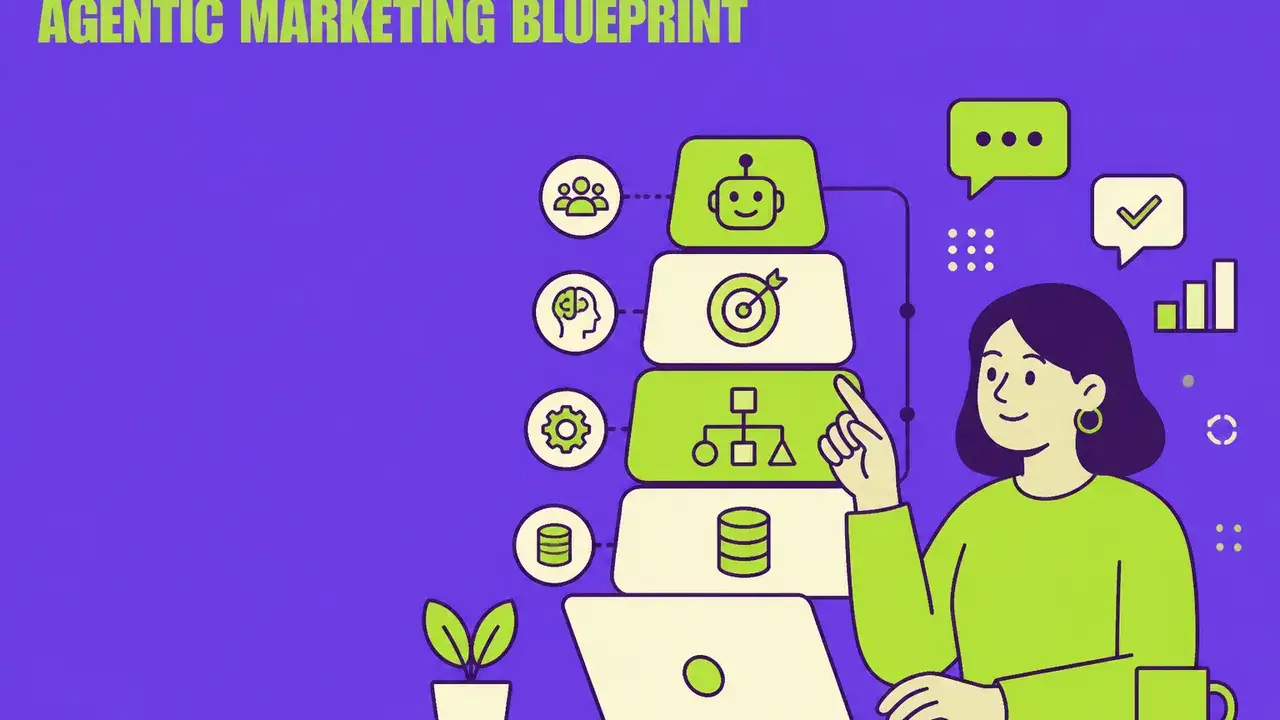
Agentic Marketing Blueprint: The Four Layers of Working Agent Teams
Knowledge, tools, agents, control: the reference architecture marketing organisations converge on in 2026 — including sequence, roles and metrics.