Creative Automation 2026: Platforms, Tools & Workflows for Marketing Teams
In short
Pillar guide to creative automation in 2026: definition, workflow, AI tool stack, 8-criteria vendor scorecard, and the platform landscape (Smartly, Celtra, Pencil, Storyteq, Bannerbear & co.).
Table of Contents
Creative Automation 2026: Platforms, Tools & Workflows for Marketing Teams
Updated: May 2026. Creative automation is no longer a "scale ad variants" tool — it is the operating layer that decides whether a brand can ship 1,200 personalised assets a week or stays stuck at 12. This pillar guide answers the five questions buyers actually search for in 2026, compares the leading platforms, and gives you a vendor-selection scorecard you can take into your next RFP.
TL;DR — Creative Automation in 60 seconds
- What it is: Software that takes a master template + structured data (copy, imagery, offers, audience) and renders thousands of on-brand creative variants automatically — across formats, channels, and languages.
- What changed in 2026: Generative AI moved creative automation from "template-fill" to prompt-driven asset generation with brand guardrails. The category is converging with creative ops, DAM, and ad-tech.
- Who needs it: Performance marketers running ≥50 creatives/week, retailers with deep SKU catalogs, multi-market brands, and any team where designers are bottlenecks.
- Budget reality 2026: Mid-market platforms USD 30k–120k/year. Enterprise (Celtra, CreativeForce, Smartly) USD 150k–600k/year. Self-built stacks (Figma Make + Bannerbear + LLM) USD 8k–25k/year — but require engineering ownership.
Table of Contents
- What is creative automation?
- How does creative automation work?
- Can creativity actually be automated?
- How to automate creative tasks with AI tools
- How to choose a creative automation platform (vendor scorecard)
- Platform landscape 2026
- Where creative automation fits in the wider creative ops stack
- FAQ
1. What is creative automation?
Creative automation is the practice of producing, adapting, and distributing creative assets — display ads, social posts, product imagery, video cutdowns, landing-page modules — through software-driven workflows instead of manual design.
A useful working definition for 2026:
Creative automation = structured creative templates + a data feed (product, audience, market) + rules/AI for generation + brand guardrails + delivery into ad platforms or CMS.
It overlaps with three neighbouring categories:
| Category | Primary job | Where it overlaps with creative automation |
|---|---|---|
| Creative ops (Air, Ziflow, CreativeForce) | Plan, brief, review, approve | Workflow + approvals layer |
| DAM (Bynder, Frontify, Adobe AEM Assets) | Store, govern, distribute assets | Asset library + rights management |
| Ad-tech / DCO (Celtra, Smartly, Meta Advantage+) | Render and serve dynamic creative at impression time | Final mile into media |
Pure creative automation platforms (CreativeForce, Storyteq, Bannerbear, Rocketium, Pencil by Brandtech) sit between brief and delivery. In 2026, almost all of them ship native LLM and image-model integrations.
2. How does creative automation work?
A modern creative automation pipeline has six stages. The whole loop runs in minutes once set up.
┌─ 1. Master template ─┐   ┌─ 2. Data feed ─────┐
│ Figma / Adobe / HTML │   │ PIM, CRM, sheets,  │
│ slots: {hero}, {cta} │ + │ promo calendar,    │
│ brand-locked layers  │   │ audience segments  │
└──────────┬───────────┘   └─────────┬──────────┘
           │                         │
           ▼                         ▼
       ┌───────── 3. Generation engine ─────────┐
       │ Rule-based fill  +  Gen-AI (LLM, img)  │
       │ Brand guardrails: tone, palette, logo  │
       └──────────────────┬─────────────────────┘
                          ▼
              ┌── 4. QA & approvals ──┐
              │ Auto-checks (legal,   │
              │ readability, contrast)│
              │ Human approval gate   │
              └──────────┬────────────┘
                         ▼
            ┌─ 5. Render & resize ──┐
            │ All formats, all aspect│
            │ ratios, all languages  │
            └──────────┬─────────────┘
                       ▼
        ┌── 6. Delivery & feedback ───┐
        │ Meta, Google, TikTok, DV360 │
        │ Performance → back to step 2│
        └─────────────────────────────┘
The 2026 unlock: Stages 3 and 4 used to need designers in the loop. With Claude 4.6 / GPT-5.6 Sol for copy and Nano Banana 2 / Seedance for image and video, the engine can now generate net-new variants from a brief — not just fill slots — while staying inside brand guardrails enforced by vision-LLM checks (logo placement, palette, type pairing).
3. Can creativity actually be automated?
The honest answer in 2026: production can. Concept cannot — yet.
What automates well:
- Format adaptation (one master → 40 placements)
- Localisation (copy + cultural imagery swaps for 12 markets)
- Variant generation for testing (10 headlines × 5 visuals × 3 CTAs)
- Catalog-driven creative (one template × 10,000 SKUs)
- Performance-driven recombination (winning elements rebuilt into new variants)
What does not automate well:
- The strategic concept ("what is this campaign actually about?")
- The provocation that makes a brand stand out in a feed of sameness
- High-craft hero films and OOH — the moments where brand equity is built
Best-in-class teams in 2026 split the work: humans own concept and craft for hero assets; automation owns the long tail (BAU social, performance creative, retail, lifecycle email modules). Treat creative automation as a production multiplier, not a creative director replacement.
4. How to automate creative tasks with AI tools
A pragmatic AI-augmented creative stack for 2026:
| Job | Recommended tool class | Examples |
|---|---|---|
| Copy variants at scale | Frontier LLM with brand prompt | GPT-5.6 Sol, Claude Opus 5 via API |
| On-brand image generation | Image model + ControlNet/style refs | Nano Banana 2, Midjourney v8, Adobe Firefly Services |
| Video cutdowns & UGC variants | Gen-video + automated edit | Seedance, Runway Gen-5, Weavy, Captions |
| Template fill at volume | Headless creative API | Bannerbear, Plainly, Creatomate |
| Brand guardrail QA | Vision-LLM check or DAM rules | Brandtech Pencil Pro, Frontify Brand Guidelines API, custom GPT-5.6 Sol vision prompt |
| Orchestration | Workflow engine + agents | n8n, Make, Zapier, custom LangGraph/Crew |
Minimum viable AI creative automation in one sprint:
- Build a brand prompt (system message: tone, banned words, formatting, examples).
- Wire your PIM / spreadsheet feed → LLM → JSON of copy variants.
- Pipe JSON + product images into a template API (Bannerbear / Plainly).
- Run a vision-LLM check against brand guidelines before approval.
- Push approved assets to Meta / Google via their bulk APIs.
Teams that ship this once tend to expand it across every BAU creative workflow within a quarter.
5. How to choose a creative automation platform
This is the highest-intent question in this cluster ($19+ CPC), so be ruthless. Use this 8-criteria scorecard in your RFP:
| # | Criterion | What to test |
|---|---|---|
| 1 | Template fidelity | Take your most complex Figma file. Can it import without breaking layers? |
| 2 | Data flexibility | Does it accept your PIM/feed natively, or only CSV uploads? |
| 3 | Gen-AI integration | Native LLM/image-model support or bring-your-own-key? Cost transparency? |
| 4 | Brand guardrails | Logo placement, palette, type pairing — enforced or just documented? |
| 5 | Output coverage | All your channels (Meta, TikTok, CTV, DOOH, email) without an extra tool? |
| 6 | Approval workflow | Real version control, comment threads, role permissions? |
| 7 | Delivery | Direct push to ad platforms, or export-only? |
| 8 | Total cost of ownership | Licence + per-render fees + onboarding + the FTE who runs it |
Red flags:
- Demo only shows happy-path templates you didn't supply.
- "Gen-AI" turns out to be a thin wrapper with no usage controls.
- No brand-guardrail enforcement — only PDFs of guidelines.
- Per-render pricing that punishes scale (the whole point of the category).
Green flags:
- Customer references in your industry running >5,000 assets/month.
- Open API and webhook coverage.
- Roadmap includes vision-model QA and agentic workflows.
6. Platform landscape 2026
A non-exhaustive map of where the leading platforms play. Pricing is indicative; always quote-driven.
| Platform | Sweet spot | Strength | Watch-out |
|---|---|---|---|
| Smartly | Performance creative at scale | Native ad-platform delivery, strong DCO | Heavy lift for non-ad creative |
| Celtra | Enterprise brand + performance | Mature DAM + DCO + analytics | Enterprise pricing & onboarding |
| CreativeForce | Retail / e-com production | Studio workflow + creative ops | Less native gen-AI |
| Storyteq | Multi-market brands | Localisation depth | UI feels legacy |
| Pencil (Brandtech) | Gen-AI native creative | Brand-trained models | Younger product, smaller ecosystem |
| Rocketium | Mid-market video at scale | Video automation focus | Less depth on display |
| Bannerbear / Plainly / Creatomate | Devs building custom stacks | API-first, cheap, flexible | You build the UI and brand layer |
| Adobe Firefly Services + GenStudio | Adobe-heavy enterprises | Tight Creative Cloud + AEM integration | Lock-in, pricing |
For most mid-market marketing teams in 2026, the right answer is one mid-market platform (Pencil, Rocketium, Storyteq) + a generative AI layer (Claude / GPT-5.6 Sol + Nano Banana 2) — not a single monolith.
7. Where creative automation fits in the wider creative ops stack
A clean 2026 creative ops architecture:
Brief & strategy   →  Creative ops platform (Air, Ziflow, CreativeForce)
Concept & craft    →  Designers + AI assistants (Figma + Claude/GPT)
Production at scale→  Creative automation (Pencil, Smartly, custom)
Asset governance   →  DAM (Bynder, Frontify, AEM Assets)
Delivery           →  Ad platforms, CMS, ESP
Measurement        →  MMM + creative analytics → back to brief
Treat creative automation as one layer, not the whole stack. Trying to make it own briefing, DAM, and measurement is the most common reason these projects stall.
FAQ
Is creative automation the same as DCO (dynamic creative optimisation)? No. DCO assembles and serves variants at impression time inside an ad platform. Creative automation produces the asset variants upstream — DCO is one of the delivery surfaces it can feed.
Will creative automation replace my designers? Not the senior ones. It will compress junior production work and free your design team to focus on concept, craft, and the hero work that builds brand equity.
How fast can we go live? A focused team can ship a first production workflow (one campaign, one channel, brand-guardrailed) in 4–6 weeks. Enterprise-wide rollout is a 2–3 quarter program.
What's the realistic ROI? Mid-market customers we work with typically hit 4–7× output per designer FTE within a quarter and 25–40 % lower cost-per-asset within two quarters — assuming the brief and data feed are clean. Garbage in still equals garbage out, just faster.
Where does this overlap with our DAM? Your DAM is the asset library and rights system. Creative automation reads from it (templates, brand assets, product imagery) and writes back to it (approved final assets). They are complementary, not competitive.
Frequently Asked Questions
What is "Creative Automation 2026: Platforms, Tools & Workflows for Marketing Teams" about?
Pillar guide to creative automation in 2026: definition, workflow, AI tool stack, 8-criteria vendor scorecard, and the platform landscape (Smartly, Celtra, Pencil, Storyteq, Bannerbear & co.).
Table of Contents: what matters?
What is creative automation? How does creative automation work? Can creativity actually be automated?
<a id="what"</a1. What is creative automation?
Creative automation is the practice of producing, adapting, and distributing creative assets — display ads, social posts, product imagery, video cutdowns, landing-page modules — through software-driven workflows instead of manual design.
<a id="how"</a2. How does creative automation work?
A modern creative automation pipeline has six stages. The whole loop runs in minutes once set up. ┌─ 1.
Related Articles
You might also be interested in these posts
 Tools & Technology
The Best AI Tools & Solutions for Businesses 2026
Which AI is the best in 2026? Comparing top AI tools (ChatGPT, Claude, Gemini), free alternatives and enterprise platforms — the pillar guide for your AI stack.
 Tools & Technology
Legacy Refactoring and Code Translation: What Agents Really Deliver
Python to Rust in days rather than months: how agentic porting works in practice, why factors of 10 to 40 are not transferable and which tests, benchmarks and ownership must be settled first.
 Tools & Technology
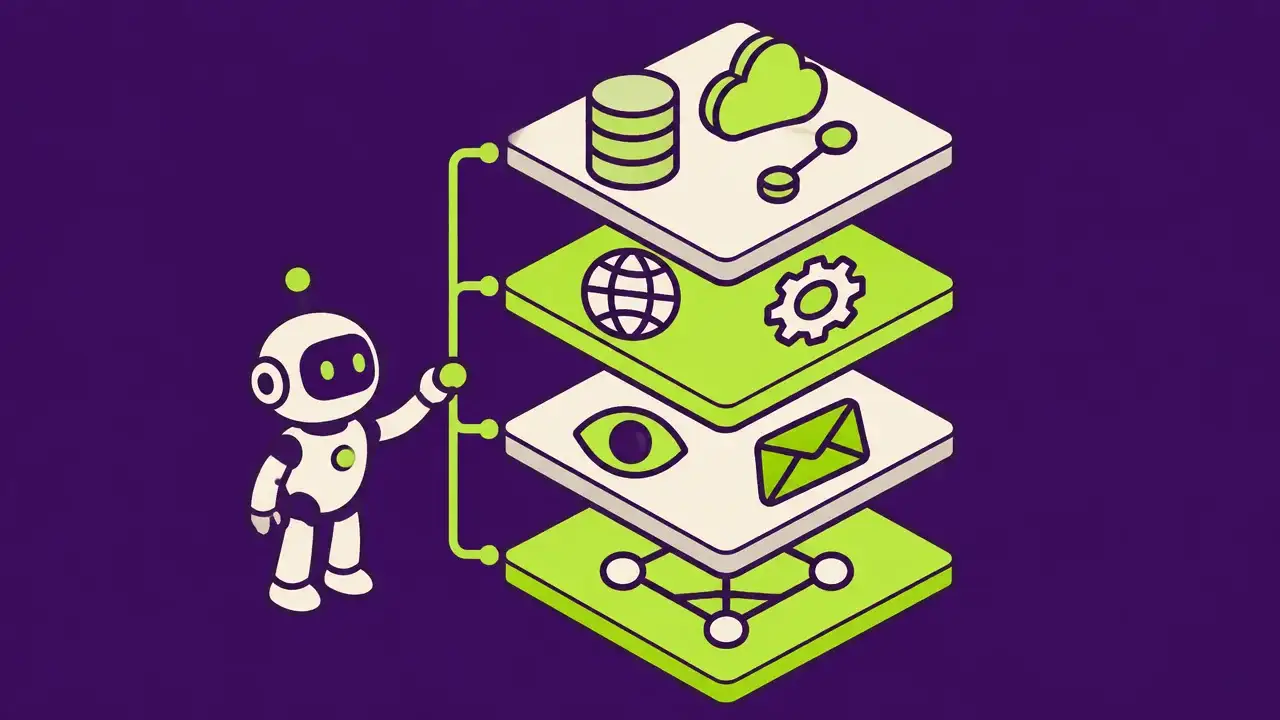
The Agentic Stack 2026: 20 Tools That Carry Agentic Development
Supabase, Vercel, Inngest, Langfuse, Attio and 15 more: the five layers of an agentic stack, what each tool does, where the limits are — and four criteria for your own selection.
AI solutions by Davies Meyer
From an application to the right delivery
Good AI applications need brand knowledge, a clear idea and the right execution. Davies Meyer brings strategy, creativity, content production and technology together. Creative Engineering is our method for making that collaboration repeatable.
We take responsibility for the concept and quality.