Marketing Context Layer: Define KPIs Before Using AI
In short
Why valid SQL can produce misleading marketing reports. A context card for lead definitions, data sources, filters and brand knowledge.
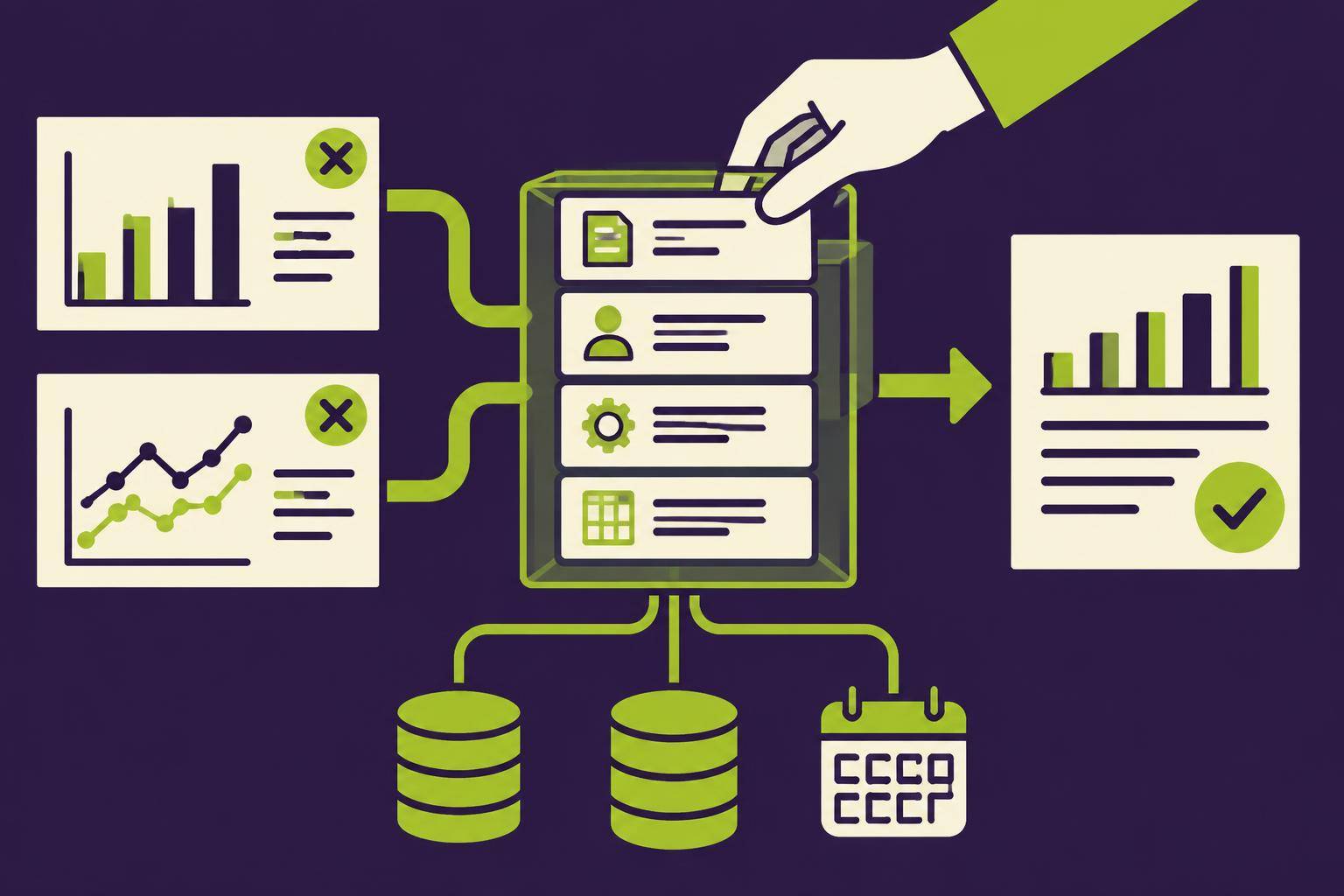
Table of Contents
Two reports show different lead counts. Both queries execute successfully. The disagreement may lie in what “lead” means: one counts submitted forms, the other qualified companies. A technically valid query is not necessarily a valid business answer. An agent accelerates this inconsistency if it lacks the definitions.
The engineering context
On 9 October 2026 LinkedIn Engineering described an internal Data Context Layer. Agents can generate valid SQL while selecting the wrong datasets or omitting required filters. Automatically generated dataset profiles are combined with human-maintained definitions, join rules and constraints. Reviewed context stays separate from automatically refreshed profiles.
Adam Greco had already used Marketing Context Layer on 2 June 2026, including brands, products and channel knowledge. We use our own working definition of an existing term, not a claimed industry standard or a phrase invented here.
A fictional reporting conflict
A team asks an agent for “German leads last month”. The form system counts submissions. The CRM counts qualified business contacts. The ad account uses click-attributed conversions with a different time basis. These cannot be presented as interchangeable measurements.
First clarify the decision: technical delivery, sales qualification or campaign optimisation? Each requires different data and definitions.
The marketing context card
| Field | What to document | Typical failure without it |
|---|---|---|
| Metric | Definition and accountable owner | Treat a form as a qualified enquiry |
| Source | Authoritative system and freshness | Treat an old export as current truth |
| Time | Event, timezone and interval | Confuse click and qualification dates |
| Region | How country or market is determined | Treat browser location as company location |
| Exclusions | Tests, spam, duplicates and cancellations | Count test submissions as demand |
| Relationships | Valid joins and keys | Count contacts repeatedly |
| Use | Permissions and consent rules | Enrich personal data without authority |
| Brand knowledge | Approved names and claims | Output inconsistent product names |
This is more specific than “use our data”. The card identifies boundaries and when to ask for clarification. Missing definitions should not be replaced by confident guesses.
Maintain context rather than uploading it once
Assign an owner and version. If sales changes qualification criteria, reports must explain the change. Historical records should not silently be interpreted as if the new rule always applied. Refresh generated profiles without overwriting reviewed human guidance.
Implementation may use a repository, data catalogue or structured configuration. The location matters less than discoverability, reviewability and appropriate access. A long prompt file without a change process does not solve accountability.
Five questions for a reporting agent
- Which approved definition are you using?
- Which source and data version are you reading?
- Which event determines the reporting period?
- Which exclusions and joins affect the count?
- What is unknown or outside your permission?
Present these alongside the result. A report without provenance and limits may look plausible while supporting a wrong budget decision. Technical acceptance and business review remain necessary.
From analytics to Creative Engineering
Context also covers approved product names, supported claims and intended audiences. Human decisions become usable in the production chain without replacing creative judgement. Comparing hooks and formats requires consistent metrics and versions.
Start with one disputed metric and one actual report. Align definition, source and filters with marketing and data owners before automating repeated analysis. The best first improvement is often a shared understanding of a number, not another agent feature.
Sources and context
- LinkedIn Engineering: Data Context Layer, 09.10.2026
- Adam Greco: The Marketing Context Layer, 02.06.2026
As of 4 November 2026. Product claims describe vendor statements, not independent evidence of outcomes. The working templates and recommendations are our editorial contribution.
Further reading and next step
Want to review a bounded workflow with us? Describe your project in the Agenten-Pilot. Scope, timing and pricing are agreed after the initial conversation.
Frequently Asked Questions
What is "Marketing Context Layer: Define KPIs Before Using AI" about?
Why valid SQL can produce misleading marketing reports. A context card for lead definitions, data sources, filters and brand knowledge.
The engineering context: what matters?
On 9 October 2026 LinkedIn Engineering described an internal Data Context Layer. Agents can generate valid SQL while selecting the wrong datasets or omitting required filters.
A fictional reporting conflict: what matters?
A team asks an agent for “German leads last month”. The form system counts submissions. The CRM counts qualified business contacts.
The marketing context card: what matters?
This is more specific than “use our data”. The card identifies boundaries and when to ask for clarification. Missing definitions should not be replaced by confident guesses.
Related Articles
You might also be interested in these posts
 Strategy
Synthetic Customers: Test Campaigns Before You Spend Budget
Digital twins and large behavior models simulate audience reactions. Where it holds up – and where it gets dangerous.
 Strategy
The AI Confidence-Readiness Gap: Trust Without Maturity
Marketing teams trust AI more than their data, processes and skills justify. A maturity roadmap.
 Strategy
Brand Mention Share Instead of Rankings: The New KPI for Visibility in AI Answers
Rankings lose meaning in AI answers. How to define and measure brand mention share properly and connect it to citation share, sentiment, and revenue – including a reporting template.
AI solutions by Davies Meyer
From an application to the right delivery
Good AI applications need brand knowledge, a clear idea and the right execution. Davies Meyer brings strategy, creativity, content production and technology together. Creative Engineering is our method for making that collaboration repeatable.
We take responsibility for the concept and quality.